


I built my first website when I was fourteen years old, on GeoCities.
If you remember GeoCities, you already know roughly how old I am and roughly how long I have been doing this. If you do not, picture a corner of the early internet where anyone could claim a little plot of land and put something on it. No frameworks, no best practices, no one telling you that you were doing it wrong. You just opened the editor and you made a thing exist that did not exist before. I was a kid, and I was hooked for life in an afternoon.
I have never really left that afternoon. I built sites as a freelancer while I travelled the world playing in a rock band, fixing a client's homepage from a green room before a show, taking a brief over a bad phone line in a country I could not point to on a map. I built an agency in London and we delivered hundreds of projects, the way most of you have delivered hundreds of projects: one at a time, learning the hard way, eating the cost of every mistake until the mistakes got rarer. In 2020 I built the first AI inside WordPress, before most people had a reason to care, because I got lucky and got my hands on GPT-2 while it was still in beta, and I sat there reading what it produced and felt the floor move under me. I have spoken on hundreds of stages about how to run an agency that does not slowly kill you. I have run masterclasses and workshops. Every year we put on the Web Agency Summit, the largest event in the world for the people who build websites for a living, and thousands of you show up.
Today Atarim serves thousands of agencies and some of the largest hosting companies on the planet, all of them building and running websites for clients. I have watched hundreds of thousands of projects move through our system. I have watched the patterns that separate the agencies that thrive from the ones that quietly fold.
I am telling you all of this for one reason. I want you to know that when I say the ground is moving again, it is not a hot take from someone who arrived last year. I have lived through every shift this industry has had, and I have skin in this one. So does everyone I work with. So do you.
This is my letter to you about what is actually happening, what is not happening no matter how loud the panic gets, and what I think the people who build the web should do about it. It is long, because it matters and because you deserve more than a slogan. Pour a coffee.
I have seen this movie before, and so have you
Here is the thing nobody likes to admit out loud at the conferences. This is not the first time someone told us the web designer was finished.
When drag-and-drop builders arrived, the word on the street was that custom work was dead. Why would anyone pay a professional when their nephew could drag boxes around for a weekend and call it a website? When WordPress went from a blogging tool to a real platform, the same chorus started up. When the page builders came, then again. When Figma rewrote how design got made and handed off, again. Every single time, a wave of new tools dropped the cost of doing the thing, and every single time a crowd of smart, experienced people stood up and said this is the end of the craft.
And every single time, the opposite happened. The craft did not shrink. It grew. The tools brought a flood of new people into the work, and the work itself climbed up a level. The professionals who had been hand-coding tables stopped hand-coding tables and started solving bigger problems. The barrier to entry dropped, the field got more crowded, and the ceiling on what a good professional could deliver went straight up. Drag-and-drop builders and the creative tools that followed them brought something like a million more people into this space. That was not the death of the industry. That was the industry getting bigger.
I have a soft spot for this pattern because I keep betting on it and it keeps paying off. The people who read each shift as an ending got left behind. The people who read it as a widening, who grabbed the new tools and climbed the level, did the best work of their careers and built the best businesses.
The shift was never the enemy. Misreading the shift was the enemy.
So when I tell you that AI is the biggest shift our industry has ever seen, please hear the whole sentence. It is the biggest, and it follows the exact same shape as every shift before it. Bigger wave, same physics.
Now the honest part, because you can smell a sales pitch
I am not going to insult you by pretending the threat is imaginary. It is not. If I stood on stage and told you AI is no big deal, you would walk out, and you would be right to.
So here is the part that is real. The tools that build websites without you are not a slide in a venture deck anymore. They are shipping, they are good enough for a large slice of the market, and they are being handed to your clients by companies your clients already pay every month.
Hostinger launched Horizons, which builds a working site from a plain description of what you want, and it runs on the same frontier models I use every day. DreamHost shipped Remixer, which spins up a complete multi-page site in two or three minutes, bundled into a hosting plan that costs less than a sandwich. Extendify quietly went and did the smartest thing of all, selling white-label AI site building straight into the hosting companies so the agency never even enters the picture. Wix and Squarespace bolted AI generation onto platforms that already had millions of small businesses parked on them. WordPress.com put an assistant right in the dashboard. This is not coming. It landed.
And the people doing the work feel it. A survey this year of five hundred US web designers, run by the hosting company 20i, found that three out of four name the rise of AI as their single biggest worry about the future of the work, ahead of rising tool costs and shrinking client budgets. Three out of four also said the competitive pressure from AI is already showing up in their businesses, not in some future quarter, now.
2026 Web Designer Survey, 20i. 500 US web designers.
I am not going to soften that. If you build straightforward business websites for a living, the floor under the low end of that work is dropping, and it is dropping fast. Pretending otherwise is how good agencies sleepwalk into trouble. The first move, the only honest move, is to look at it straight.
But read the rest of the data, because the panic is lying to you
Now look at the same survey again, the parts that do not make a scary headline.
Those same five hundred designers, the three out of four who are worried, also told the researchers something else. Nearly four out of five said they still feel properly paid for their work. More than a third are earning over a hundred thousand dollars a year. That is not a profession in collapse. That is a profession in transition, and the difference between those two words is the whole ballgame.
Because here is what is actually splitting apart. The survey asked these designers what their clients care about most when they buy. The top answers were speed and price. How the site actually looks came a distant third. When the only things a client is buying are speed and price, AI wins that sale every time, and you should let it. When the job needs real thinking, real research, custom integrations, accessibility done properly, performance that holds up, a brand that means something, the machine does not win that sale, the professional does. The market is not disappearing. It is cleaving cleanly down the middle, and the cut runs right between the work a machine can do alone and the work it cannot.
There is one more number from that survey I cannot stop thinking about. Nine in ten of those designers said their clients underestimate what web work actually costs. Sit with that. The gap between what the work is worth and what the client thinks it is worth has been the quiet tax on this industry for twenty years. It is exactly the gap the AI builders are walking into, not by being as good as you, but by being good enough for what a confused client thinks they need.
And then the part everyone forgets in the noise. The DIY corner of the web, the part where someone builds their own site with no professional involved, is tiny. It always has been. Something close to ninety-five percent of the websites in the world are still built and run as a professional service, by someone who knows what they are doing, for someone who does not. The slice that goes fully do-it-yourself is a sliver. The story that AI is going to turn every small business owner into their own web team is a fantasy sold by people who have never actually sat across from a small business owner and watched their eyes glaze over.
Across professional services more broadly, there is already a clear line forming. The firms that put a real strategy around AI in place are turning up roughly twice as likely to be growing as the ones that did not. That research is not about our industry specifically, so I will not pretend it is. But the pattern does not check which industry you are in before it applies to you.
So here is the real shape of the moment. The low, commodity end of website creation is being automated. The professional market underneath it, the ninety-five percent, is wide open, and it is about to be served by a new generation of professionals who never learned to do it the slow way. The question is not whether you survive AI. The question is whether you are one of the people who climbs the level, the way the best of us climbed it through every shift before this one.
The real shift is not where everyone is looking
Now I want to give you the thing I have been preaching for years, long before any of this was fashionable, because it is the part almost everyone gets wrong.
Everyone is staring at website creation. That is the shiny object. That is where the demos live and where the fear lives. And it is the wrong place to look.
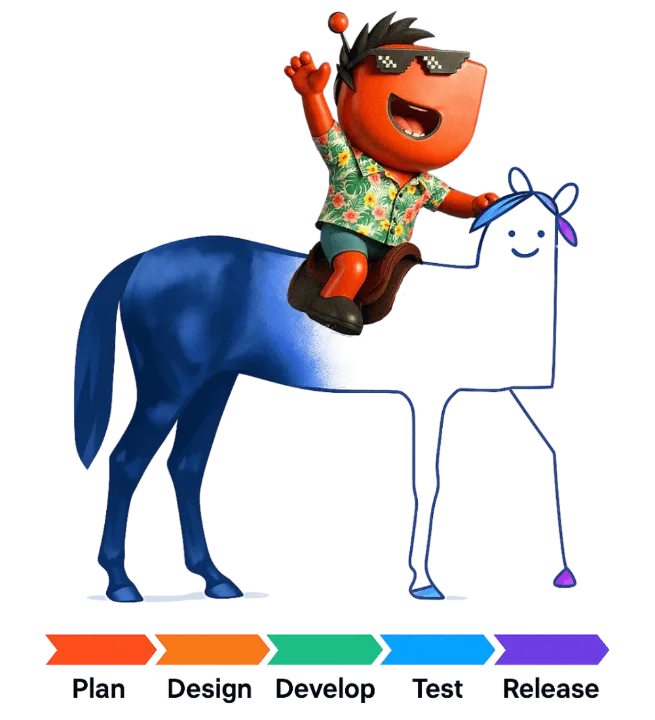
Yes, the tools collapsed the cost of building a website. A million people came in because of it, and a few million more are coming in now. But building a website was never the hard part of running a web business. If you really want to learn to build a site, you can figure it out in a weekend. You always could, eventually. What took me years, what took every agency owner I respect years, was not learning to build. It was learning to run.
I spent tens of thousands of dollars and a chunk of my twenties on this. Events, masterminds, courses, communities, the whole circuit. I burned time and I burned clients learning lessons that, in hindsight, somebody should have just been able to hand me on day one. How do you scope a project so it does not eat you alive. How do you run a care plan that the client actually values instead of resents. How do you do speed optimisation on a WordPress site without breaking it, the right order of operations, what to check and in what sequence. How do you do the SEO groundwork. How do you talk to a client when something goes wrong so you keep the relationship instead of losing it. How do you build a set of repeatable steps, the standard operating procedures, that let the work happen reliably whether or not you are personally in the room. How do you build a business you can actually leave for two weeks without coming back to a phone full of fires.
That knowledge is the moat. Not the building. The running. And it took years and real money and real pain to acquire, and every new agency owner has had to acquire it from scratch, the same expensive way, over and over, forever.
So here is the shift, the actual one. The same way drag-and-drop builders and creative tools collapsed the barrier to entry on building a website, from years down to hours, we are now collapsing the barrier to entry on operating a profitable web business.
From five years down to one hour.
Every hard-won standard operating procedure I paid in time and money to learn, every one of them, is a workflow now. The speed optimisation routine I once paid a specialist eight hundred dollars to run every single time, because I had watched his six-hour course and decided I never wanted to do it myself, that is a workflow. The SEO groundwork I paid another specialist a couple of grand for, that is a workflow that runs in a click with a human review on top. The Friday client update, the monthly outcome report, the thirty-day check-in, the proactive look for what the site needs next, all of it. Years of expensive lessons, deployed on day one, for someone who just walked into this industry last month.
That is the real democratisation, and it is so much bigger than building. Because building was never the bottleneck on this industry growing. Operating was. And we just removed it.
The two kinds of agency, and only one of them survives
Let me tell you which agencies get hurt by this, because it is not the ones the headlines are worried about.
There are two kinds of agency. I have watched both kinds move through our system by the hundreds of thousands of projects, so this is not a theory.
The first kind is reactive. They are there when the client reaches out, if the client is lucky. If it is not the weekend. If they are not on holiday. If they are not already buried in three other projects. The client emails, and eventually, maybe, something happens. And the worst version of this is the care plan or the retainer where the client pays every month and, if they do not specifically ask for something, nothing gets done at all. The client sits there having paid for five hours they did not use, hearing nothing, and slowly starts to feel like they are paying a tax.
Here is the disconnect that quietly ends those relationships, and I want to name it precisely because once you see it you cannot unsee it. To the agency, that retainer feels like insurance. I am here if the site goes down. I have the tooling set up to catch problems. I jump in when it matters. That is a fair thing to sell and the agency believes in it completely. But to the client, the exact same retainer feels like a tax. I am paying a hundred a month for a guy I have not heard from in seven months and I genuinely do not know why. Same money, two completely different stories, and the two sides are not even talking about the same thing. That is a broken value chain, and a broken value chain is a relationship on a countdown. When an AI tool shows up offering to do it now, for less, that client is already half gone, and they were half gone before the AI ever arrived.
I am here if the site goes down. I have the tooling set up. I jump in when it matters.
I am paying a hundred a month for a guy I have not heard from in seven months, and I do not know why.
The reactive agency is the yes-man. They wait to be asked, then they deliver, then they wait again. And the reactive agency is the one this shift wipes out, not because AI is so brilliant, but because the reactive model was already running on borrowed time and AI just called the loan.
Then there is the second kind. The proactive agency. These are rarer, and they have always been rarer, because being proactive used to be brutally expensive. These are the ones who send every client a note every Friday on what they did, what they need, and what is coming next. The ones who send a real report once a month on outcomes, not activity. The ones who go looking for opportunities to make their client more money before the client thinks to ask. These are the agencies whose clients call them their digital partner, not the person who fixes the website sometimes. These are the ones with the ten-year relationships. These are the ones who never feel the tax-versus-insurance gap, because the client feels the value every single week.
The proactive agency does not get wiped out by this shift. The proactive agency gets handed a superpower.
 Can you update the plugins?
 Done!
And send this month’s report?
Sure, by Friday.
Done!
And send this month’s report?
Sure, by Friday.
 Monthly report sent to Harbor Legal, under your brand.
7:02
Monthly report sent to Harbor Legal, under your brand.
7:02
 4 plugins updated overnight. Backup taken first.
3:40
4 plugins updated overnight. Backup taken first.
3:40
 Draft ready: a post in the client’s voice, sent for approval.
6:15
Draft ready: a post in the client’s voice, sent for approval.
6:15
 Flagged: the contact form loses mobile visitors. Fix proposed.
8:01
Flagged: the contact form loses mobile visitors. Fix proposed.
8:01
Proactivity used to be a luxury. Now it is a setting.
Here is why the proactive agency was always rare, and why that is about to change completely.
Being the good agency was expensive. The Friday update across forty clients, by hand, is most of a day gone. The monthly outcome report, done properly, is hours per client. Hunting for opportunities on a client's site before they ask is unpaid time you can only justify for your biggest accounts. So even the agencies that knew they should be proactive could only afford to be proactive for a handful of clients, and they ran reactive on the rest and hoped nobody noticed. Most clients, if I am honest, never got the thirty-day check-in. Most never got the monthly report. The good behaviour was real, but it could not scale, so it stayed a luxury for the top of the client list.
Drop the cost of that behaviour to near zero and the whole equation flips. Now the Friday update goes to all forty clients, written in your voice, every week, automatically. Now every client gets the monthly report. Now every site gets watched, and when something needs doing, the routine work just gets done, and a tidy note arrives saying it was handled. The client does not have to log in. The client does not have to chase. The work simply happens in the background and the client feels, every week, that someone capable is looking after them.
That is the moment the tax becomes value again. That is the moment the broken chain reconnects. And it is not a moral upgrade that requires you to suddenly become a more diligent person. It is a setting. The behaviour that used to take the discipline of a saint and the staffing of a much bigger company is now just how the work runs by default.
The arc here is one I have watched play out once already, in a neighbouring room. A couple of years ago, AI in customer support was a toy bolted onto the side, someone copy-pasting from a chatbot into a ticket. Then the chatbots got good enough to handle the first twenty percent on their own. Now the best support operations run with AI handling the overwhelming majority and humans stepping in only where judgment is actually required. That same arc is now running through agencies, and we are early in it, right at the part where it still looks like a toy to the people not paying attention. It will not look like a toy for long.
Your clients already want to touch this. The only question is who is holding the rails.
I want to be very direct about something, because this is the part agency owners resist hardest and it is the part that matters most.
Your clients already want to use AI. They are not waiting for your permission and they are not asking for it. The days of the seventy-two-hour turnaround on changing a line of text on the homepage are over. Dead. When a client knows they can get something done instantly, and it matters to them, they will go and do it themselves, with whatever tool is closest to hand. I do not even think that is a bad instinct. It is a completely reasonable instinct.
The problem is not that they want to touch AI. The problem is that when they do it alone, they have no guardrails. No backups before a risky change. No one checking that the plugin update will not take the site down. No one who knows that the thing they are about to do will quietly wreck their SEO or break their checkout. They have a powerful tool and no idea where the cliff edges are, and sooner or later they walk off one.
So the real question this shift puts to every agency is not whether your clients use AI. They will. The question is whether they use it with you, inside rails that you control, or without you, with no rails at all. Those are the only two options. There is no third option where they politely keep waiting seventy-two hours for a text change because they respect the process. That option left.
This is the whole reason I built what I built. I wanted the agency to be the guardrail. I wanted the client to be able to talk to their own website, to ask for the things they always asked for, the new testimonial, the holiday banner, the landing page for next month's event, and to get it now, but inside a system where the agency has already decided what the AI is allowed to do on its own and what has to come back to a human. Where the risky things route to you with full context instead of getting executed by a confident machine at two in the morning. Where you, the professional, set the boundary, and the client gets the speed they want without getting the cliff edge they did not see.
That is what Atarim is. The AI web agency, plugged into yours. Not a tool that replaces you. A team that does the work the way you would have trained a junior to do it, with you holding the rails and stepping in exactly where your judgment is the product. The years of standard operating procedures, deployed in an hour. The proactive behaviour that used to be a luxury, switched on by default across every client. And the part I am proudest of, the moment that lands hardest every time I show it: when the work crosses a line you drew, it does not guess. It comes back to you. The agency is the escalation layer, the same way a human support agent sits behind a chatbot. Necessary today, and the necessity is real, because the judgment is real.
What I actually believe is coming
I will tell you where I think this goes, and then I will get out of your way.
I do not think agencies disappear. I have said this for years and I will say it through this shift too. I think the opposite happens, the same way it has happened every time. The barrier to entry on running a profitable web business just collapsed, which means a new generation of professionals is about to walk into this industry who would never have made it through the old gauntlet of expensive mistakes. The freelancer who could build but never learned to run a business can run one now. The designer who was brilliant at the craft and hopeless at the operations can finally have both. The field gets bigger, not smaller. The craft climbs a level, not down one.
And the work itself gets better. The grind that none of us got into this industry to do, the plugin updates, the speed passes, the keyword groundwork, the status emails, the reports, the things that burned us out and made us resent the work we used to love, that grind stops being your job. What is left is the part that was always the point. The relationship. The strategy. The problems only a human who understands a business can actually solve. We are not removing the professional from the web. We are removing the parts of the job that were quietly grinding the professional down.
There are only two ways to create real value for anyone, ever. You make them money or you save them time. This shift does both at once, for you and for your clients, and the agencies that grab it with both hands are going to look back on this period the way the smart ones looked back on WordPress and the page builders, as the moment they stopped competing on the floor and started building something that could not be commoditised out from under them.
I have lived through every shift this industry has had. I started on GeoCities at fourteen and I have not found a reason to stop since. I have been wrong about plenty of things, but I have never once been wrong about this part. The shift is not the thing that ends agencies. Misreading it is.
So read it right. The machine is coming for the commodity work, and you should let it have the commodity work. Climb the level. Become the proactive agency you always knew you should be, now that it costs you almost nothing to be one. Be the guardrail your clients are quietly begging for. And do not, under any circumstances, sit still and hope it blows over, because it is not weather. It is the tide, and the tide does not care how long you have been standing on the beach.
We built the AI web agency so it could plug into yours. I would love for you to come and see what that actually means, not because I want to sell you something, but because I have spent my whole life in this room with you and I do not want to watch good people get caught on the wrong side of a shift I can see coming.
Come to the Summit. Argue with me about this. Tell me where I am wrong. That is what the room is for. We are all building the same web, and it is about to get a lot bigger.
See you out there.

The AI web agency.
Plugged into yours.
Come and see what it actually means. Connect a site, set your guardrails, and watch the first workflows run.