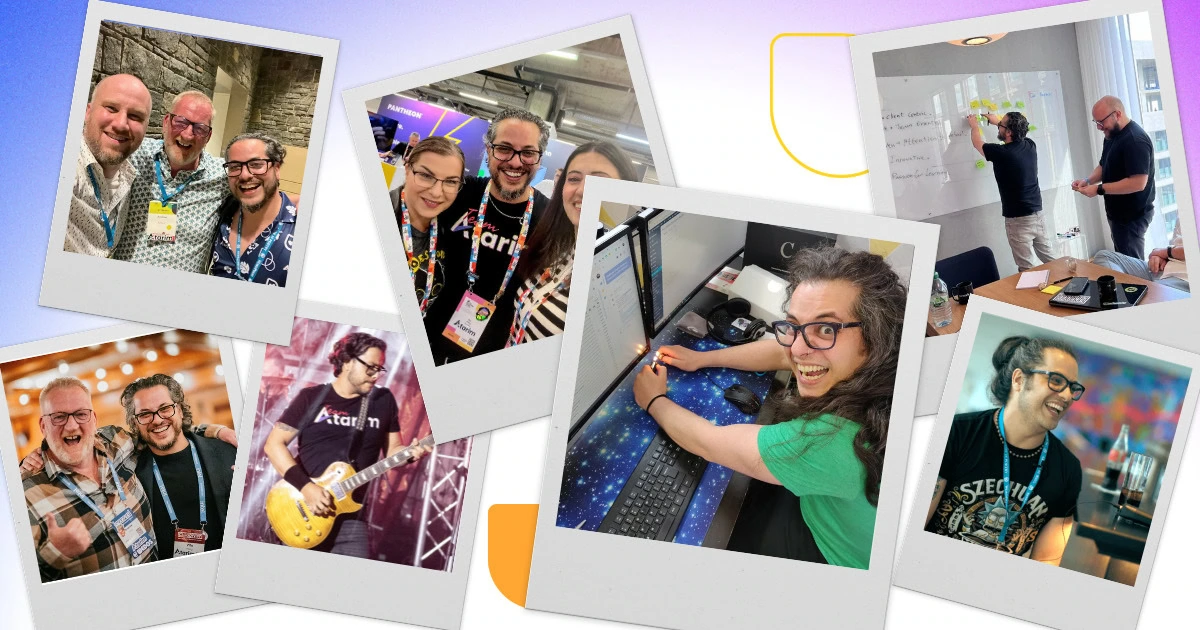

Years ago, I was parked outside a McDonalds somewhere in Europe, stealing their WiFi to build a website for a client between gigs. I had maybe two hours before soundcheck.
This is where Atarim has its earliest beginnings.
Not in an office with a fancy set up and a white board, but in a van with three guys who hadn’t done laundry in a week, and some fries going cold on the dashboard.
It Started Because The Band Broke Up
I was a kid from a small town in Israel. Borrowed an electric guitar to impress a girl. Slept with it next to me in bed that first night because I was already obsessed.
Spent a decade trying to become the best rock musician I could be, working weekends as the youngest top guitar salesman at the biggest music shop in the country, attending music college, and reading every business and marketing book I could buy on the side to grow the band.
We rebranded. Wrote new songs in English. Did an online launch using everything I’d taught myself.
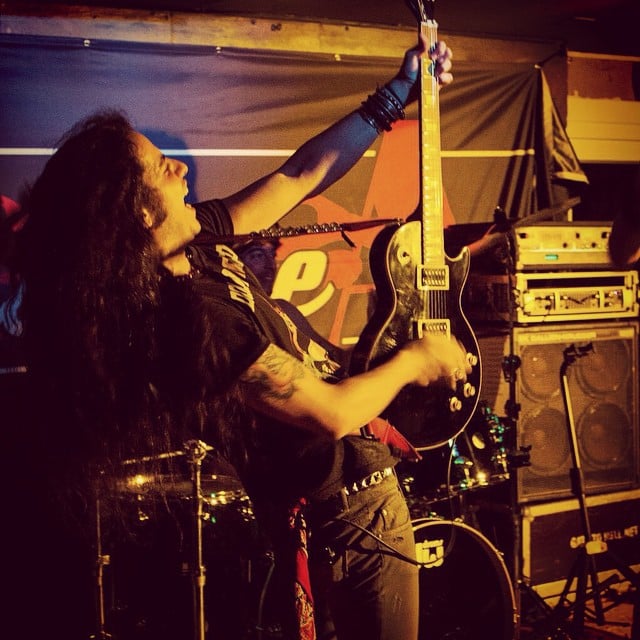
Within a month, our little band from a tiny country got signed to a British label, packed up our lives and started touring Europe.
Went from playing to less than 10 people in pubs to thousands, sharing stages with artists I grew up listening to!
And… I was still broke.
The websites I was building from the van started getting noticed. People asked me to do the same for them. So McDonalds became my office, and “web designer” became the thing I did between sets.
Then, right after the biggest show we ever played, the band split up.
But it was the best thing that could have happened at the time. I was free. For the first time in a decade, I got to decide what came next, and I was buzzing to find out what I could build when the only person I had to convince was me.
Within a year of going full time on the agency, I’d hit six figures. And then I ran face-first into the wall every agency owner eventually hits.
The 4 Things That Were Eating My Agency Alive
Margins were shrinking. Bigger projects meant I’d be dealing with more chaos and more chaos meant more risk. A couple of slow months would have ruined the business.
When I sat down to figure out where the time was going, I kept hitting the same few problems on every project:
- Clients took forever to send content. They didn’t know how to give design feedback, so revision rounds dragged on.
- They reached out for support through every channel imaginable: WhatsApp voice notes (my least favorite), Facebook DMs, LinkedIn, text messages, phone calls, Skype, Hangouts, emails, sometimes literally walking into the office.
- And after launch, most never actually used the site as the marketing tool we’d built it to be.
My team was spending more time hunting for things than building them. A revision request buried in a Skype thread. One client on the phone right now while another had a 3pm meeting on the calendar.
I tried specialized spreadsheets, strict systems, SOPs, and nothing was really fixing the problem. To say I was pulling my hair out is an understatement.
So I built the thing I wished existed.
Year One: Click On The Damn Website
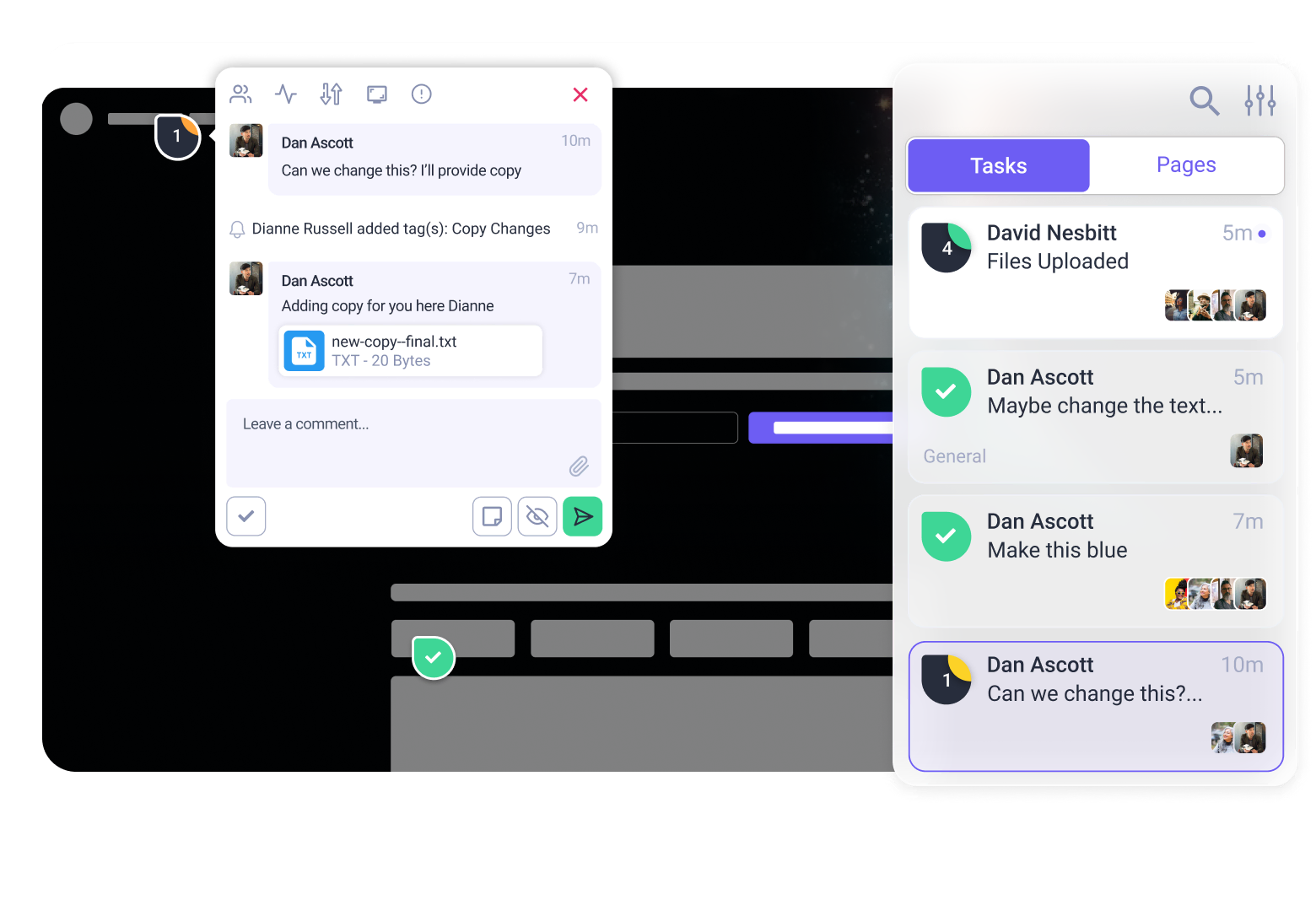
The first version of Atarim was a visual collaboration hub.
Clients could click on the exact part of a website they wanted changed and just leave a comment right there on the spot. No more “the third section, no wait, the fourth, the one with the blue button, no, the other blue button.”
You just point at the thing and say what you want.
I’ve always thought about what we do at Atarim as simply digitizing human experiences. And honestly, pointing at something and asking for it to be changed is about as human as it gets.
That instinct is the whole heart of the product.
Looking back, it sounds kind of obvious. But at the time, nobody was doing it. And the agencies who tried it? They never went back.
You Built This Before We Did
I don’t like to think we built the audience. You did.
Agency owners told other agency owners. WordCamp speakers were mentioning us from the stage without us ever asking. We’d sponsor an event and people would wander up to the booth going “oh, you’re the comment-on-the-website people.”
Then COVID hit.
We’d put a huge bet on WordCamp Asia in early 2020. We’d booked the flights, designed the booth, and shipped the swag (a huge amount of money worth of swag actually).
We were less than a year old, and I was terrified that this was the end of the business before we could ever really get started.
So I asked the team: what if we still bring people together anyway?
That became the first Web Agency Summit. And on day one, we crashed our own platform because way more people showed up than we’d thought. For a couple of hours we were in full crisis mode, pulling in help from people across the industry who dropped what they were doing to jump on a call with us. We got it stable. Everyone saw every talk we promised and damn we had a lot of fun our first year.
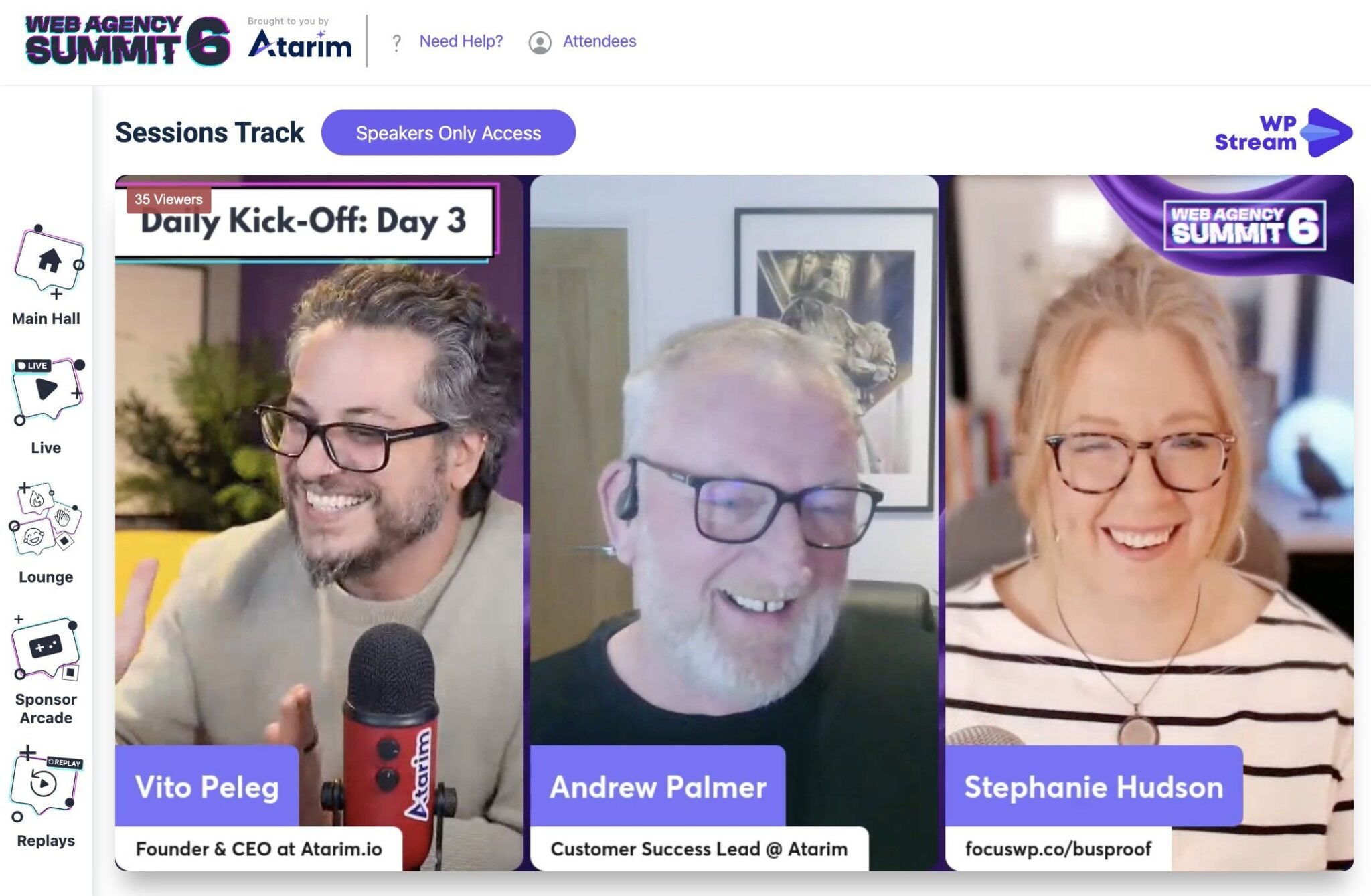
Six years later, it’s the biggest event in our space. It happened because the community refused to let it not happen.
The Bet I Made In 2021
Around the same time, my long-time friend Andrew Palmer and I launched Bertha AI.
We were very lucky to be among the first 1,000 people to get access to GPT2 and back then ChatGPT hadn’t existed yet.
Andrew & I were very excited because we knew the biggest bottleneck in every website project we’d ever worked on was content. Clients couldn’t write it. Agencies couldn’t get it out of clients. Projects sat for weeks waiting for copy and we had solved it.
So we built Bertha. The world’s first AI writing assistant inside WordPress. Woo! (and the second inside Chrome!)
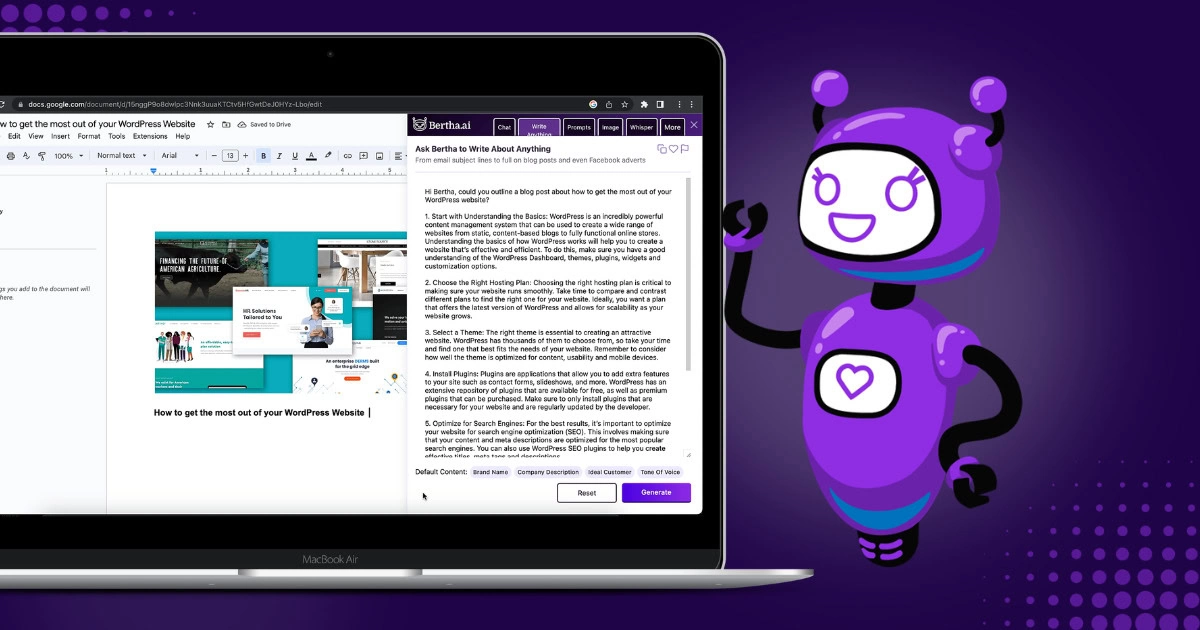
Bertha lived right inside the editor our customers already used. Hit a button, and Bertha would generate headlines, body copy, alt text, blog posts, the lot. She cut the time agencies spent on content by something like 90% when we did the research.
I pulled back from Bertha in early 2022 to focus on Atarim, and Andrew took the reins. We got destroyed by ChatGPT, but she’s still loved by the people who use her.
I learned a lot about building & working with AI from Bertha.
The Pivot I Refused To Rush
There’s a reason I waited a few years before adding AI to Atarim. There was no shortage of pressure to ship something fast, but I didn’t want to add it just to say we had it. I wanted to wait until we could do something that actually helped.
So we held off until the tech caught up enough to solve something real for the agencies who trust us with their work.
Then the models got good enough to see and understand a high-res mockup the way a designer would, and that’s when I knew it was time.
In October 2025, we launched the InnerCircle.
Six AI agents named Index, Pixel, Glitch, Lexi, Navi, and Claro, each with deep expertise in design, UX, SEO, front-end development, accessibility, and project management.
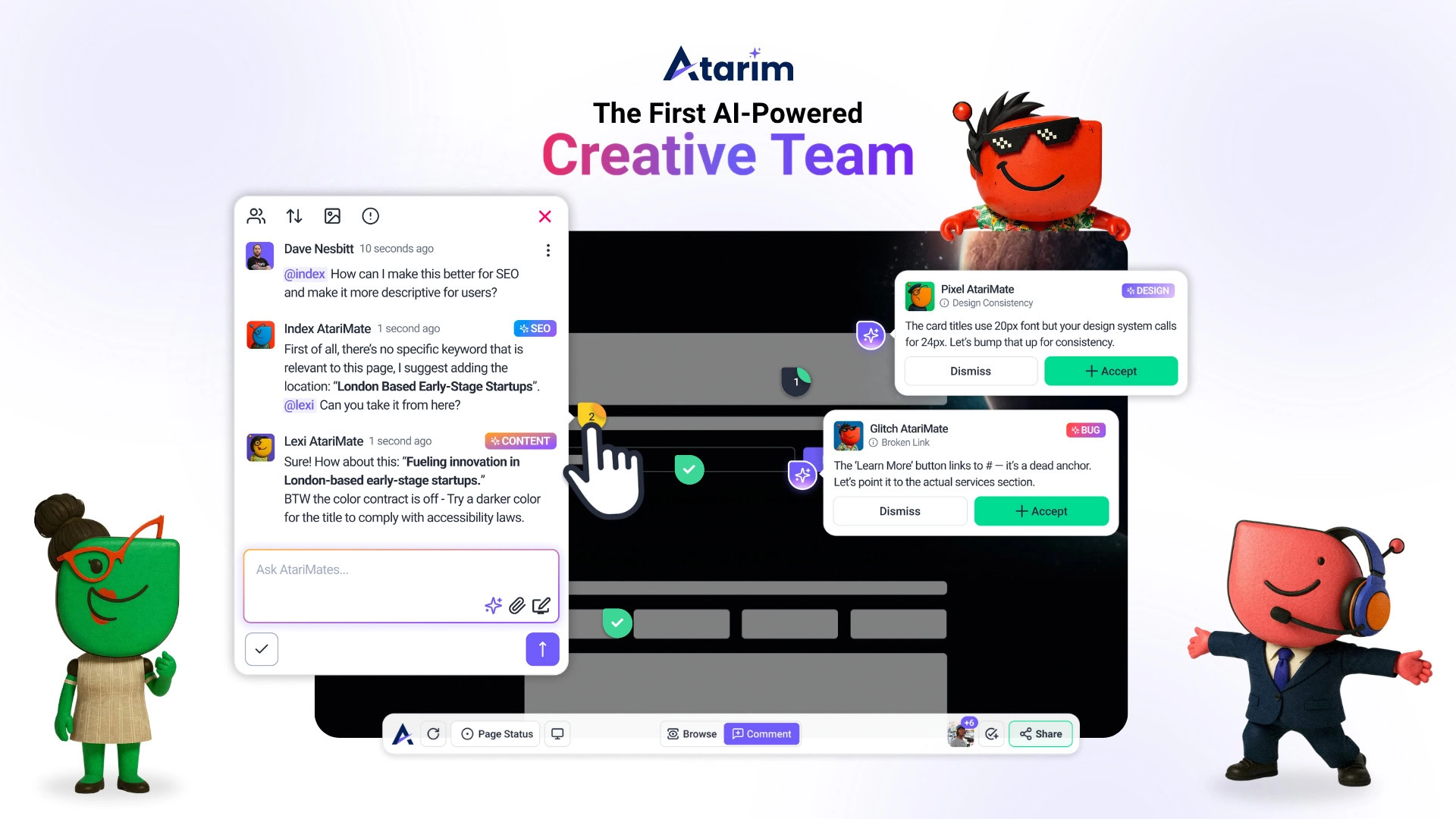
They don’t sit off to the side as a separate chatbot. They live inside your projects with you, review your work in context, and give you the kind of feedback you’d expect from a senior teammate who actually understands what you’re trying to build.
We didn’t add AI to Atarim. We built a creative team that lives inside it and that was freaking cool!
What 7 Years Looks Like From Here
Which brings me to what’s next.
The InnerCircle was step one: a creative team that reviews your work right alongside you.
With v5, they stop just pointing things out and start doing the work with you, inside your projects, the same way a real teammate would. Flag a button that’s misaligned, a page that loads slow, a headline that falls flat, and they’ll go in and fix it inside the live project, then show you exactly what changed before anything ships.
That’s all I’ll say for now. But it’s the biggest leap we’ve taken since “click on the damn website,” and I think it changes what running an agency even looks like.
I am really excited to get this in your hands later this month.
Huge heartfelt thank you to you, the community, and everyone who’s been along for the ride these last seven years. I am so thankful for what we’ve built together.
Here’s to year eight. Let’s build it together.
Vito