How to Review and Respond to Client Feedback
A repeatable pass for working through what clients have left you — and choosing the right way to answer each piece of it.
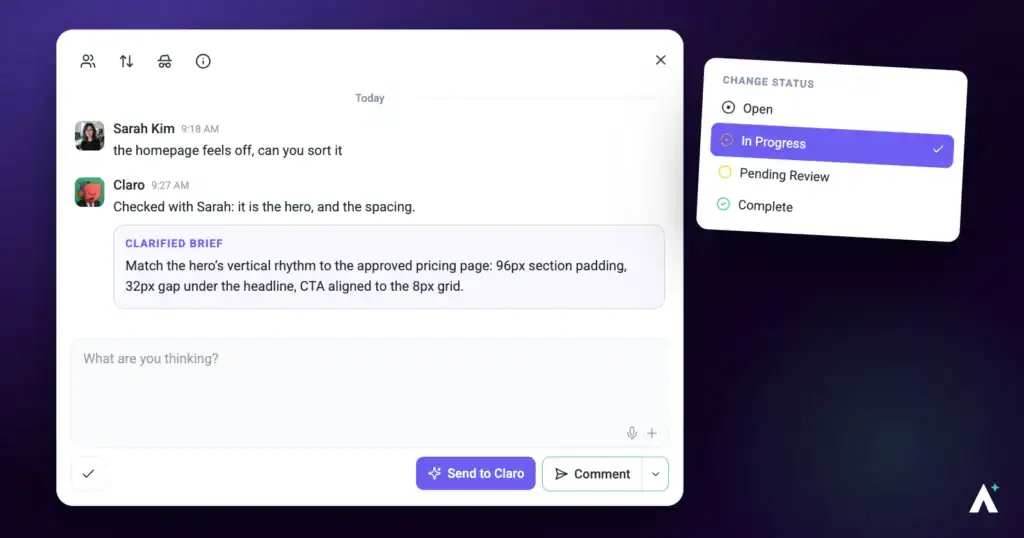
Reviewing feedback and responding to it are two different jobs, and most teams only have a process for the first. Triage tells you what to look at; responding is where the client actually forms an opinion of you. This article covers both, in the order you would do them.
The part worth slowing down on is the middle: Atarim gives you three distinct ways to answer a piece of feedback, and they reach different audiences. Picking the wrong one is the most common avoidable mistake in a feedback round.
Start on the Projects Screen
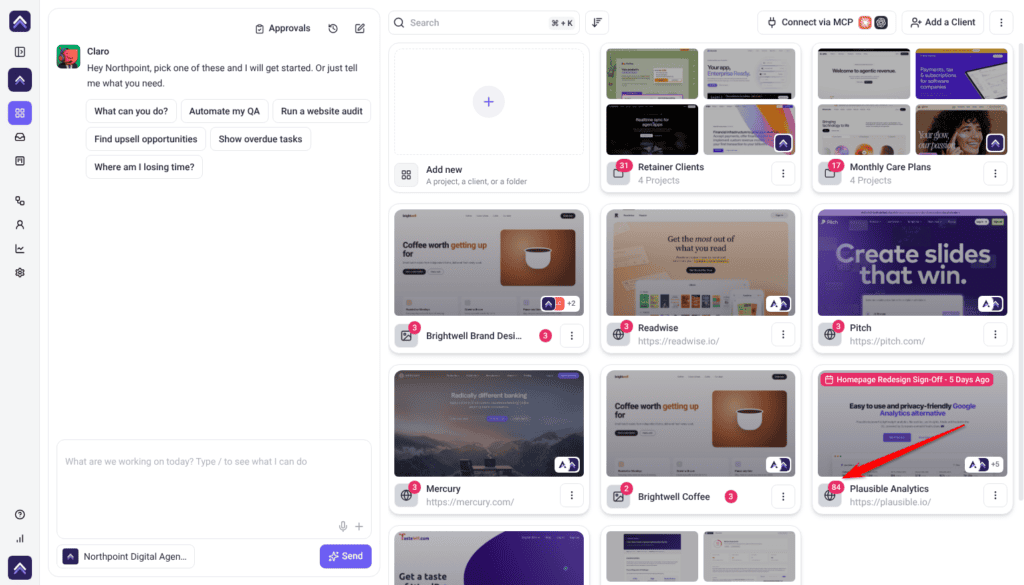
Before opening anything, decide which project needs you. The Projects screen shows each project with its open task count, which is the fastest signal of where feedback has piled up.
Instructions:
- Go to the Projects screen.
- Scan the open task counts to see which projects have accumulated work. A project whose count has jumped since yesterday is usually where a client has just finished a review round.
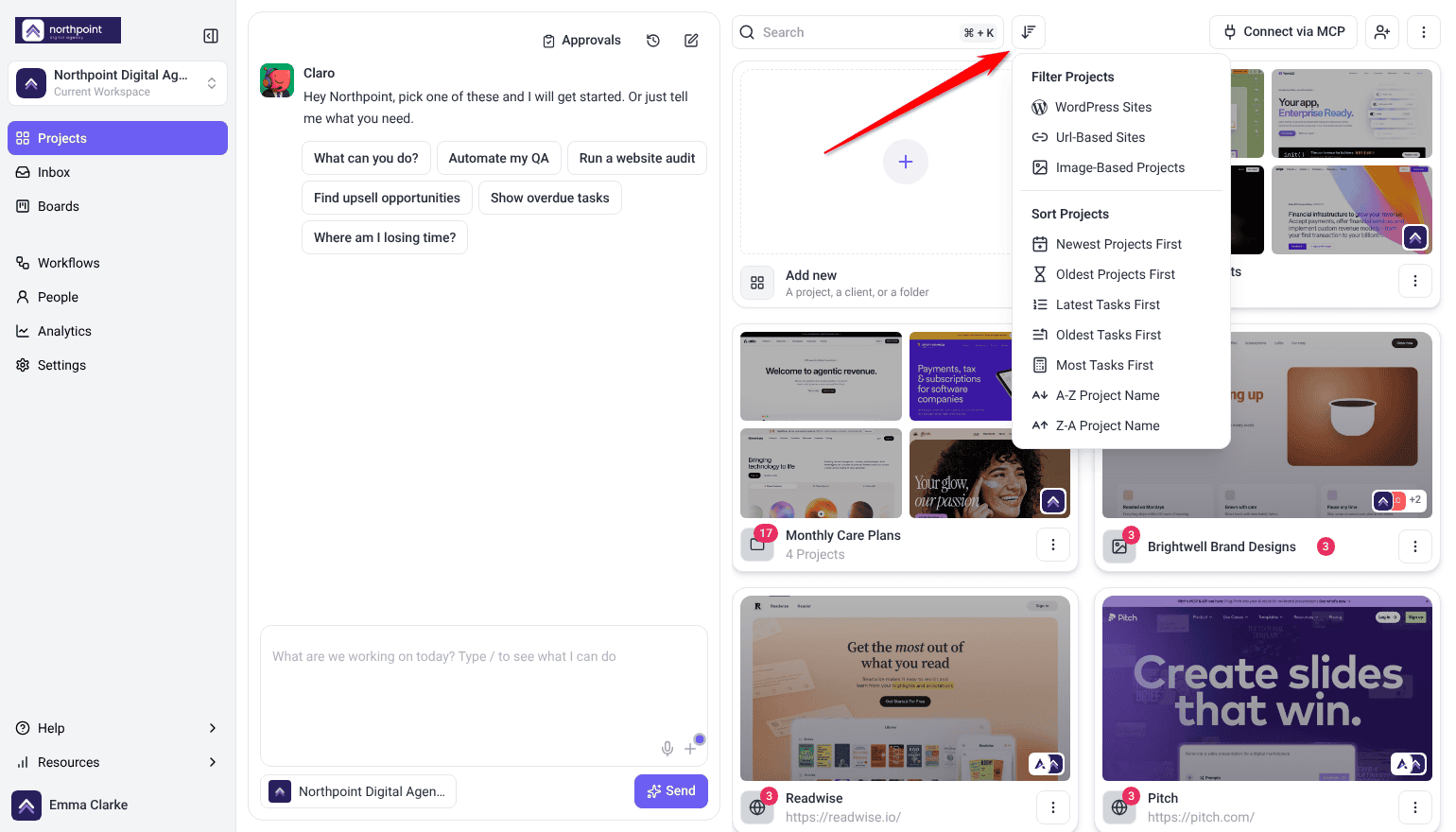
- Sort or filter to bring recently active projects to the top.
- Open the project you are working on today.
Filter Down to What Actually Needs You Now
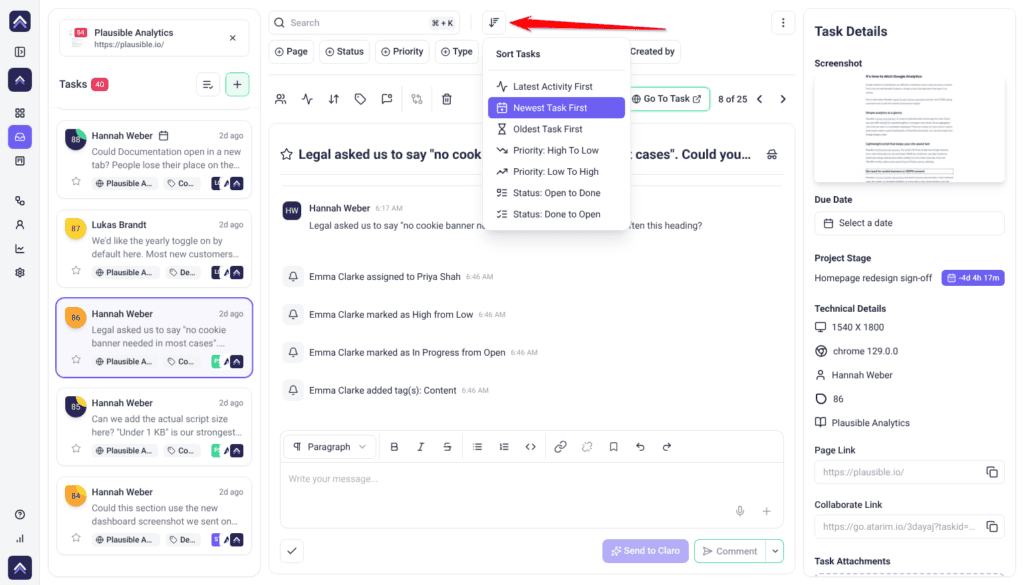
Open the task list for the project and narrow it before you start reading. Two filters do almost all the work.
| Filter by | Values | Use it to |
|---|---|---|
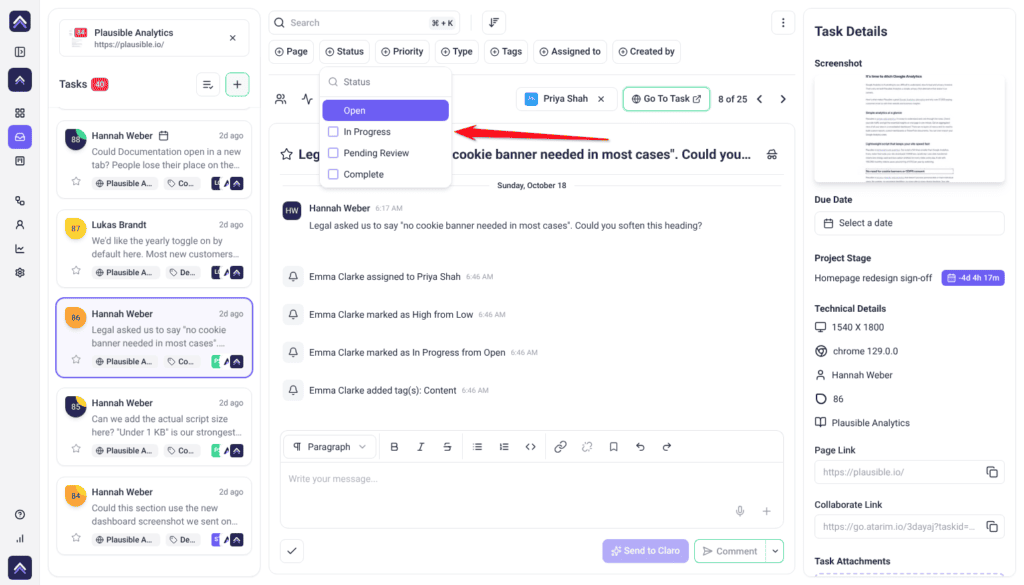
| Status | Open, In Progress, Pending Review, Complete | Hide finished work and focus on Open and In Progress. |
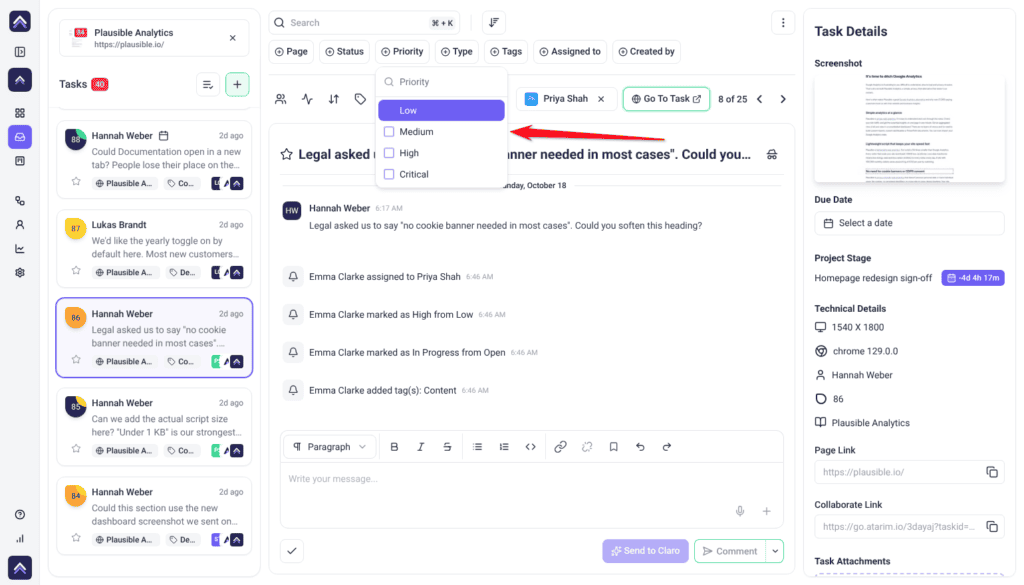
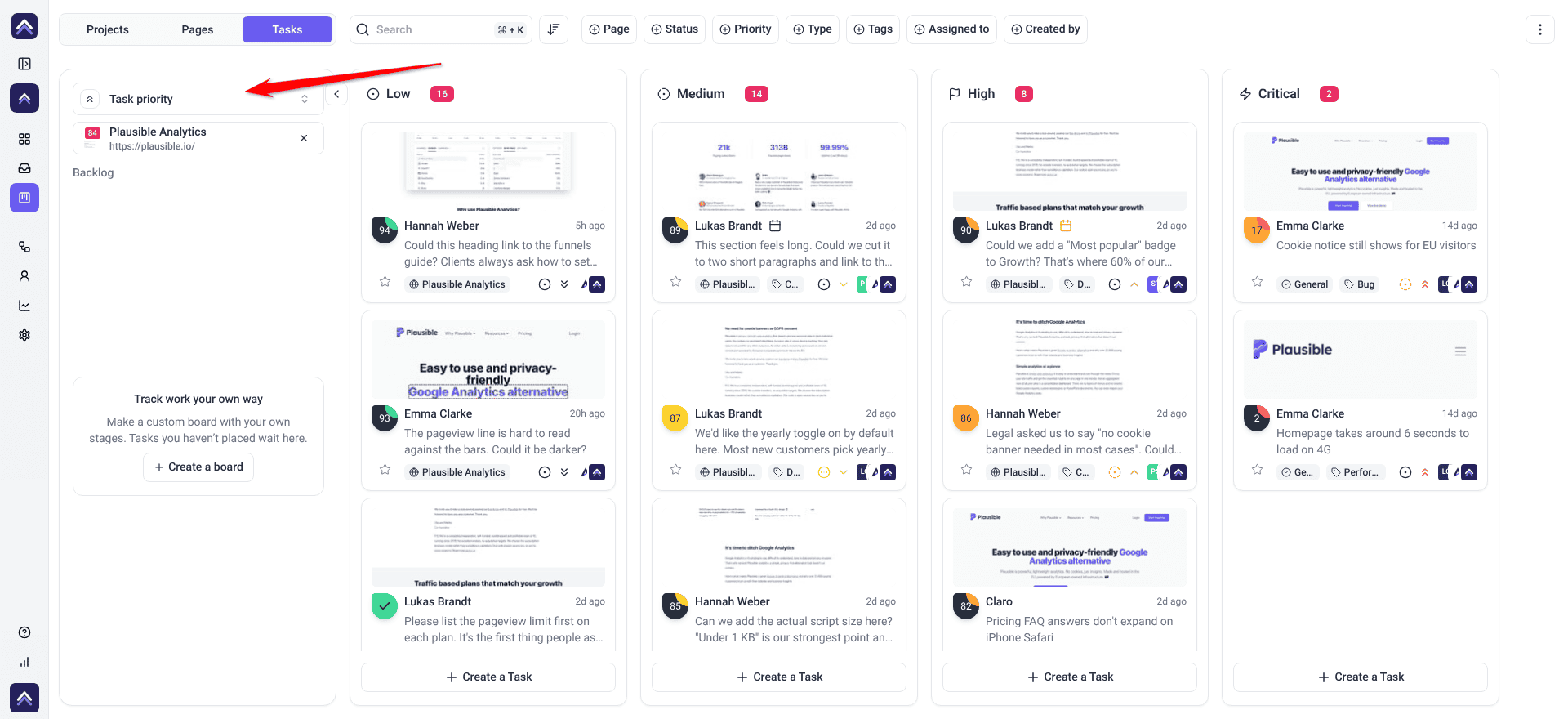
| Priority | Low, Medium, High, Critical | Work down from Critical rather than top to bottom. |
Triage is a different job from answering, and doing it first is what stops a long list feeling unmanageable.
Instructions:
- Filter status to Open and In Progress. Completed work drops out of view.
- Sort or filter by priority and start with Critical, then High.
- Work through that set before widening the filter again.
Choose How to Respond
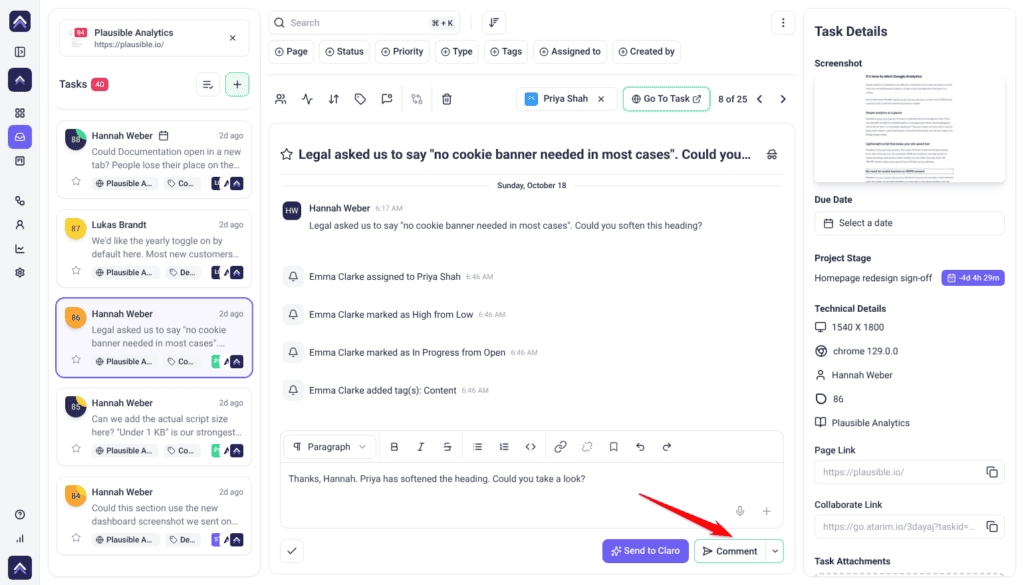
This is the step the title of this article is really about. Each task gives you three ways to answer, and they do not reach the same people.
| Use | Who sees it | When |
|---|---|---|
| Comment | Everyone with access, clients and guests included. | Answering the client, asking them a question, confirming what you will do. |
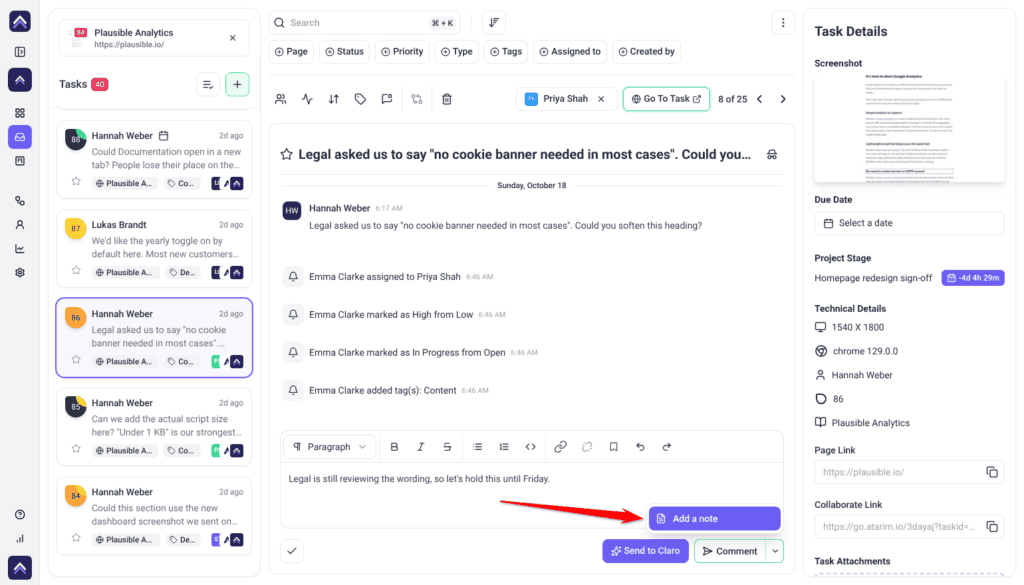
| Private note | The project owner, Administrators and Team Members only. | Internal context, scope concerns, anything you would say to a colleague but not the client. |
| Whoever you address it to. | Continuing a thread the client started by email. |
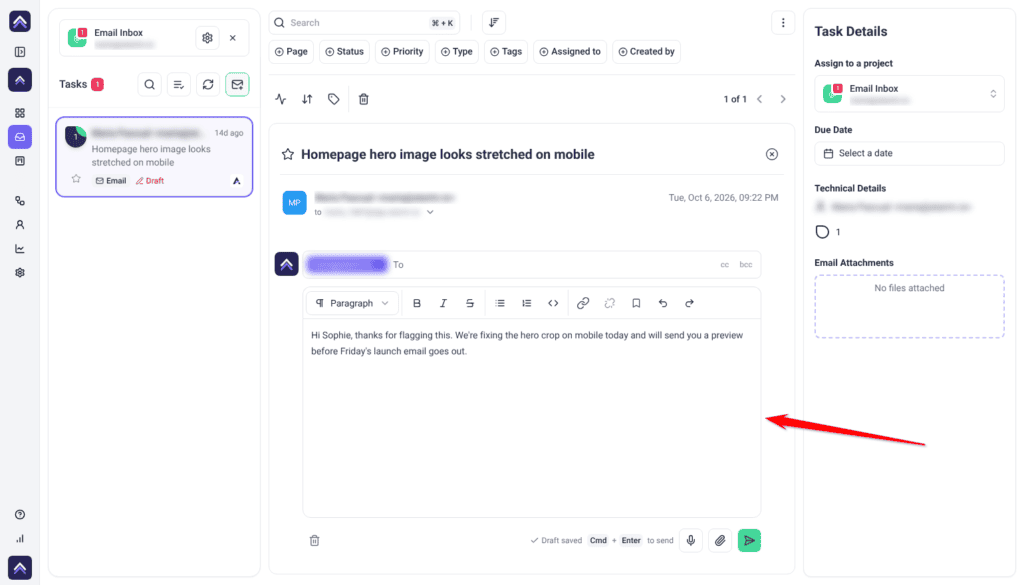
When the Feedback Is Not Clear
You may not need to ask. Claro, the InnerCircle’s feedback specialist, assesses feedback for how clear and actionable it is as it is written, and follows up with the client directly when it falls short — offering them a few specific options they can preview on the page rather than sending them away to write a better comment.
Work the Board for the Bigger Picture
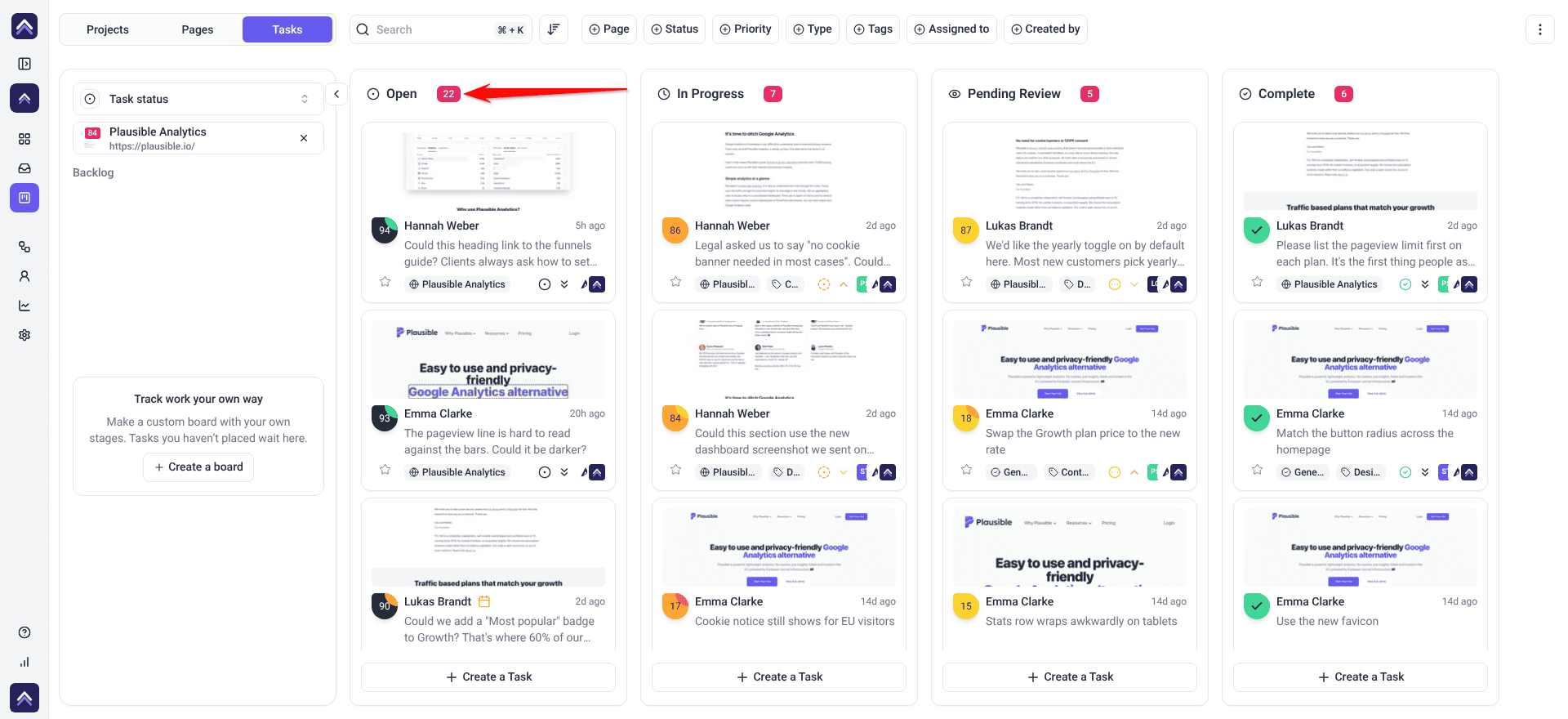
The Task status board on the Tasks tab shows the same tasks grouped by status, which makes it the better view for spotting a pile-up — twenty tasks sitting in Pending Review means you are waiting on the client, not the other way round.
- Open the Boards screen for the project.
- Read the column sizes before reading any individual task. Where work is stuck tells you what to fix about the process, not just the page.
- Move tasks between statuses using the status control on the task, or select several and use Status in the toolbar. Selected tasks move together in one action.
Tag Recurring Themes
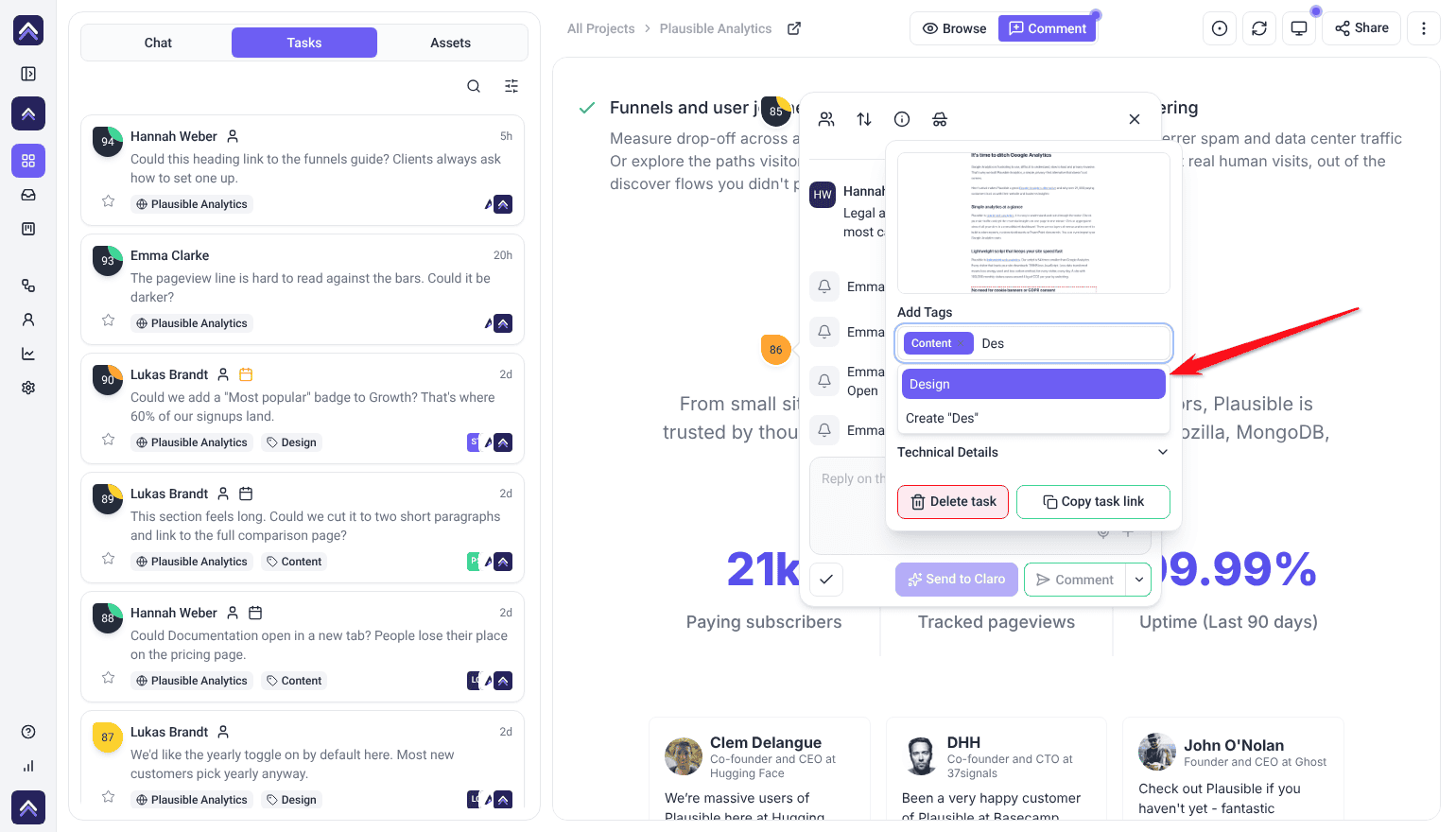
Tags earn their keep when the same kind of feedback keeps arriving. Once a theme is tagged, you can pull every instance of it together and deal with it in one pass instead of six.
Instructions:
- Open a task and select the tag control.
- Type a tag name and press Enter. A new tag is created if it does not already exist, and applied to the task.
- Apply the tag filter on the list or board to pull up everything carrying it.
Make Sure Nothing Arrives Unnoticed
Notifications are what stop feedback sitting unread. Every type is on by default, which is usually too many rather than too few — the goal is that a notification arriving means something, so people still open them in month six.
Instructions:
- From the main dashboard, select Settings.
- In the Communication group, select Notifications.
- Switch each notification type on or off. The panel saves automatically — there is no Save button.
- Add any address that should be copied on everything under Additional recipients, separated by commas.
Hand the Work Back
Finishing a task is not the same as telling the client it is finished. Which status you use decides what happens next.
| Set it to | Means | Use when |
|---|---|---|
| Pending Review | Ready for the client to look at. | You want them to check or approve before you close it. |
| Complete | Done and closed. | The change needs no sign-off, or they have already approved it. |
Benefits of a Repeatable Pass
| Benefit | In practice |
|---|---|
| Nothing gets lost | Triage by priority rather than arrival order, so the important items do not sit behind the noisy ones. |
| Internal thinking stays internal | Notes give scope concerns and QA remarks a home that is not the client’s feed. |
| Consistent answers | Canned responses mean the same question gets the same reply from anyone on the team. |
| Bottlenecks become visible | Column sizes on the board show whether you are waiting on the client or they are waiting on you. |
| Themes get handled once | Tags let you address six instances of the same request in a single pass. |
Example Use Cases
| Situation | How to handle it |
|---|---|
| A client left forty comments overnight | Filter to Open, sort by priority, and work down from Critical. Tag repeated themes as you go. |
| A request is out of scope | Note the concern internally first, agree a position, then comment once with the answer. |
| The same request keeps arriving | Tag it, filter by that tag, and handle the whole set together. |
| Feedback is too vague to act on | Check whether Claro has already followed up. If so, nudge the client to answer it. |
| Pending Review is filling up | You are blocked on the client. Send one comment listing what is waiting. |
| Your team keeps giving different answers | Write the agreed answer once and save it as a canned response. |
Known Limitations
- Status changes carry no explanation. A notification tells the client something moved, not what you need.
- There is no per-client notification profile.
- Only a comment’s author can answer Claro’s follow-up. Your team cannot clarify on the client’s behalf.
- Tags are unrestricted. Clients and team members can both create them, so the list needs managing.
- Some responding options are plan-dependent — private notes and canned responses each show a plan badge where unavailable.
- Internal tasks suppress all notifications, including to your own team.
FAQs
Can I update task status from the task list?
Yes. Select several tasks with multi-select and change their status in one action. Assignees are set one task at a time.
What if the feedback is unclear?
Claro may already have followed up with the client automatically, offering them specific options. If it has not, ask one specific question in a comment.
How do I reply without the client seeing it?
Use a private note rather than a comment. Notes are visible only to the project owner, Administrators and Team Members, and never trigger notification email.
Should I use Pending Review or Complete?
Pending Review when you want the client to check or approve first. Complete when no sign-off is needed or they have already approved.
What if a client creates their own tags?
Ask what they mean by them. A client’s tags often describe their internal plan, which is useful information you will not find elsewhere.
How do I keep answers consistent across the team?
Save the answers you give repeatedly as canned responses and insert them from the composer.
Why is nobody being notified about a particular task?
Check whether the task is marked internal. Internal tasks send no notifications to anyone, your own team included.
Common issues
- Feedback is sitting unread for days — check your own notification preferences in your profile, and set a fixed daily triage time.
- The client says they were not told the work was ready — a status change alone does not explain anything. Add a comment when you hand work back.
- You cannot resolve a pending clarification on a client’s comment — expected. Only the author can. Ask the client to open their own comment.
- The client saw an internal remark — it was posted as a comment. Choose Add a note from the Comment button for internal remarks.
- The tag list has become unusable — agree a short naming convention with the team and consolidate.
- Nobody is notified about a task at all — check whether it is marked internal. That suppresses every notification, including to your team.
- Priorities look arbitrary — clients do not set priority reliably. Set it yourself during triage.
Conclusion
The review half of this is mechanical: scan the Projects screen, filter to Open and In Progress, work down from Critical, tag the themes. Once that is a habit it takes minutes.
The respond half is where the judgement lives. Decide whether each answer belongs in a comment, a note, or an email before you type it, and add a sentence of explanation whenever you hand work back. Explore How To Improve Client Satisfaction
Tips & best practices
- Triage at a fixed time each day rather than reacting to notifications.
- Set priority yourself as you triage — clients do not do it reliably.
- Decide comment, note, or email before you start typing.
- Ask one question at a time; three questions get one answer.
- Use multi-select and the toolbar's Status control for batches.
- Batch your hand-backs and pair them with a comment saying what is ready.
- Keep the tag list short and agree the names with your team.
- Check whether Claro has already followed up before chasing a vague comment yourself.