Setting Due Dates and Prioritizing Tasks in Atarim
Make deadlines visible and urgency obvious — so the next thing to work on is never a question.
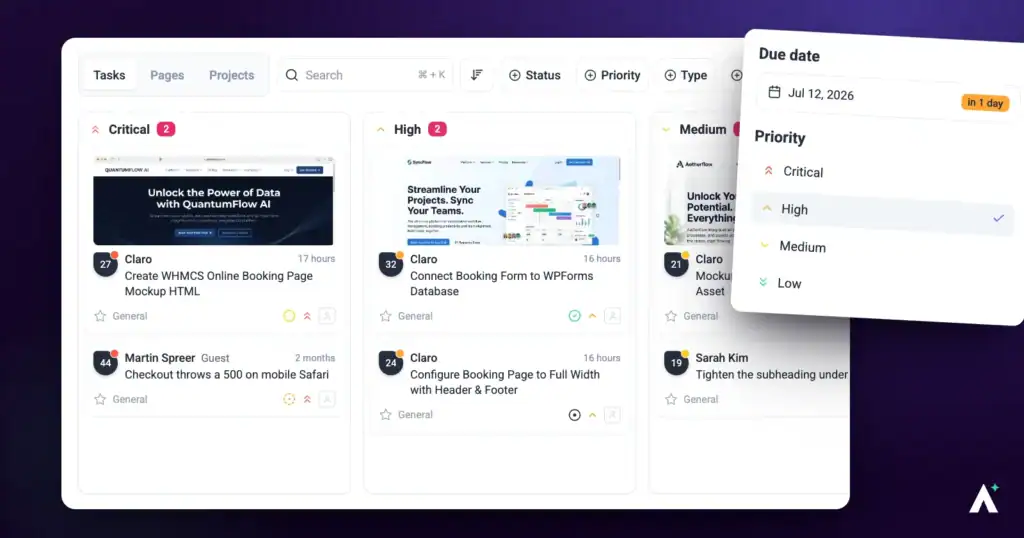
Priority and due dates answer different questions. Priority is how much something matters relative to everything else. A due date is when it has to be done. A task can be Critical with no deadline, or Low with a hard date next Tuesday.
Used together they mean nobody has to ask what to pick up next.
The Four Priority Levels
Four levels, deliberately few. The value is in everyone using them the same way, so it is worth agreeing what each one means for your team.
| Priority | Suggested meaning |
|---|---|
| Low | Worth doing, no deadline pressure. Picked up when there is room. |
| Medium | Normal work in the queue. The default for most things. |
| High | Needs attention this week. |
| Critical | Blocking something, or client-facing and broken. |
Priority saves the moment you set it and is visible to everyone, so it works as a shared signal rather than a personal marker.
Instructions:
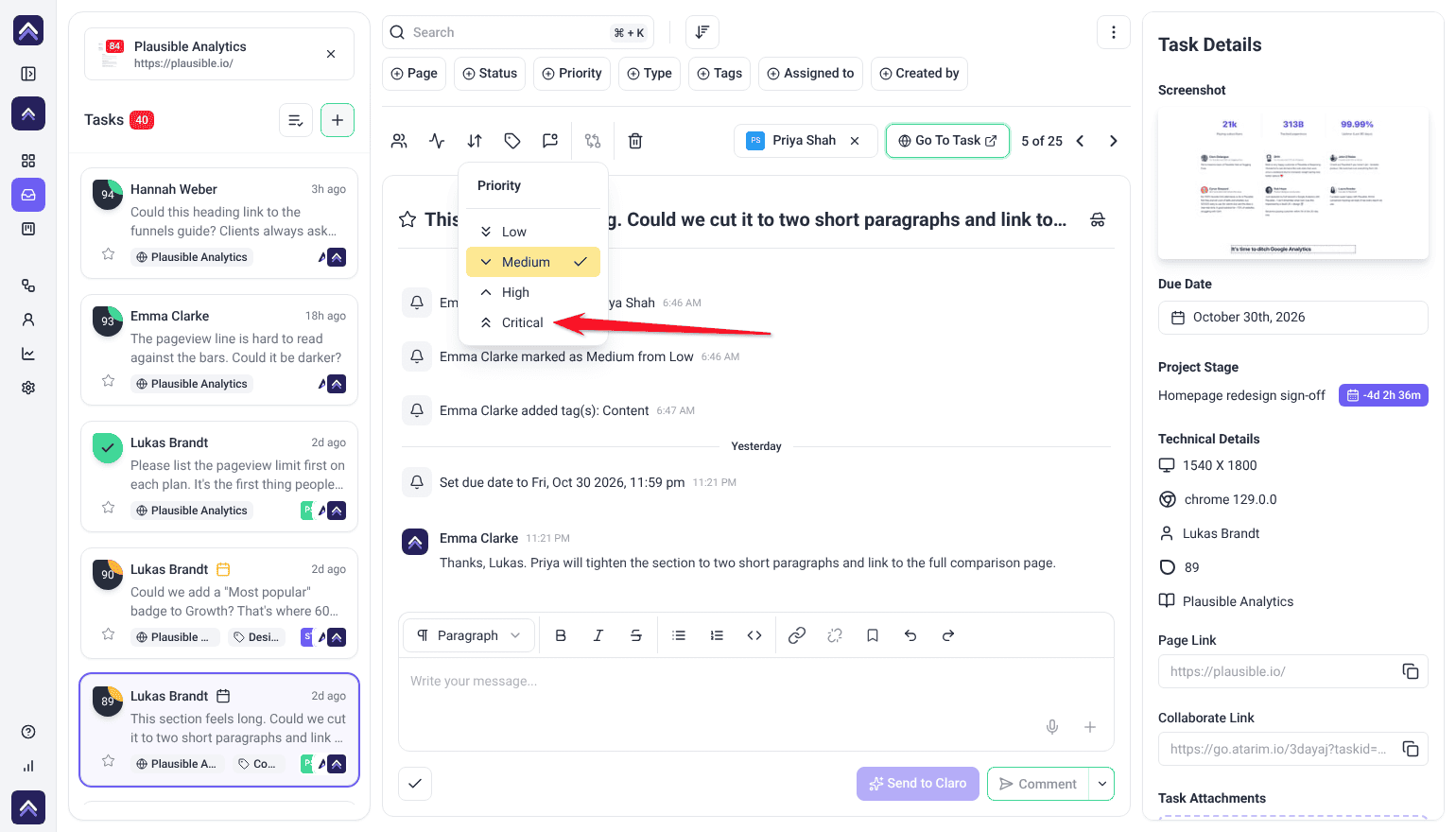
- Open the task in the Inbox, on Boards, or in Collaborate.
- Select the priority control and choose a level. The change saves immediately and everyone sees it.
Prioritising a Batch by Dragging
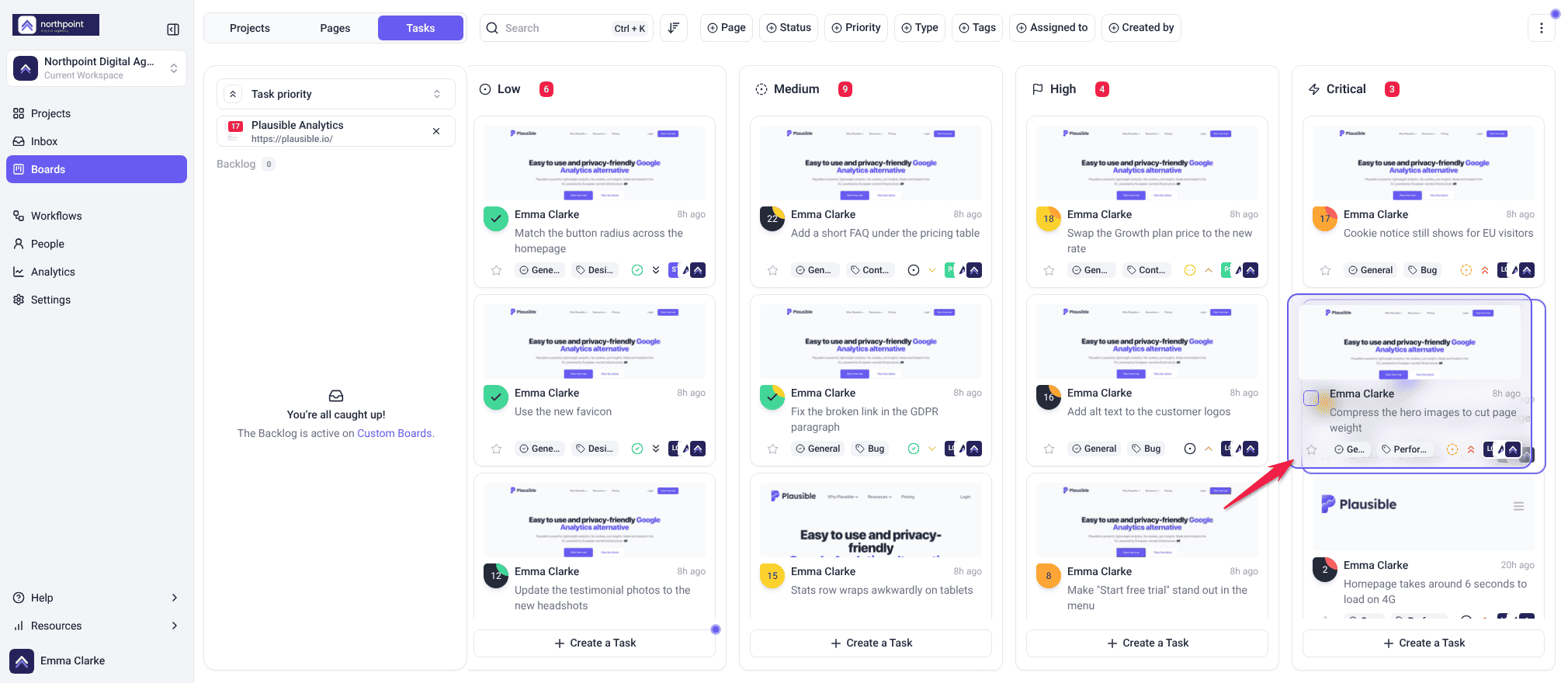
Setting priority one task at a time is fine for a few. After a client review drops forty, the board is the faster route — because it can group by priority instead of status.
Instructions:
- Open Boards and open the Task priority board on the Tasks tab. Its columns are Low, Medium, High, and Critical.
- Drag each card into the column that matches its urgency. Dragging on this board sets the task’s priority, so triaging and setting are the same action.
- Switch to the Task status board to carry on working.
Setting Priority in Bulk
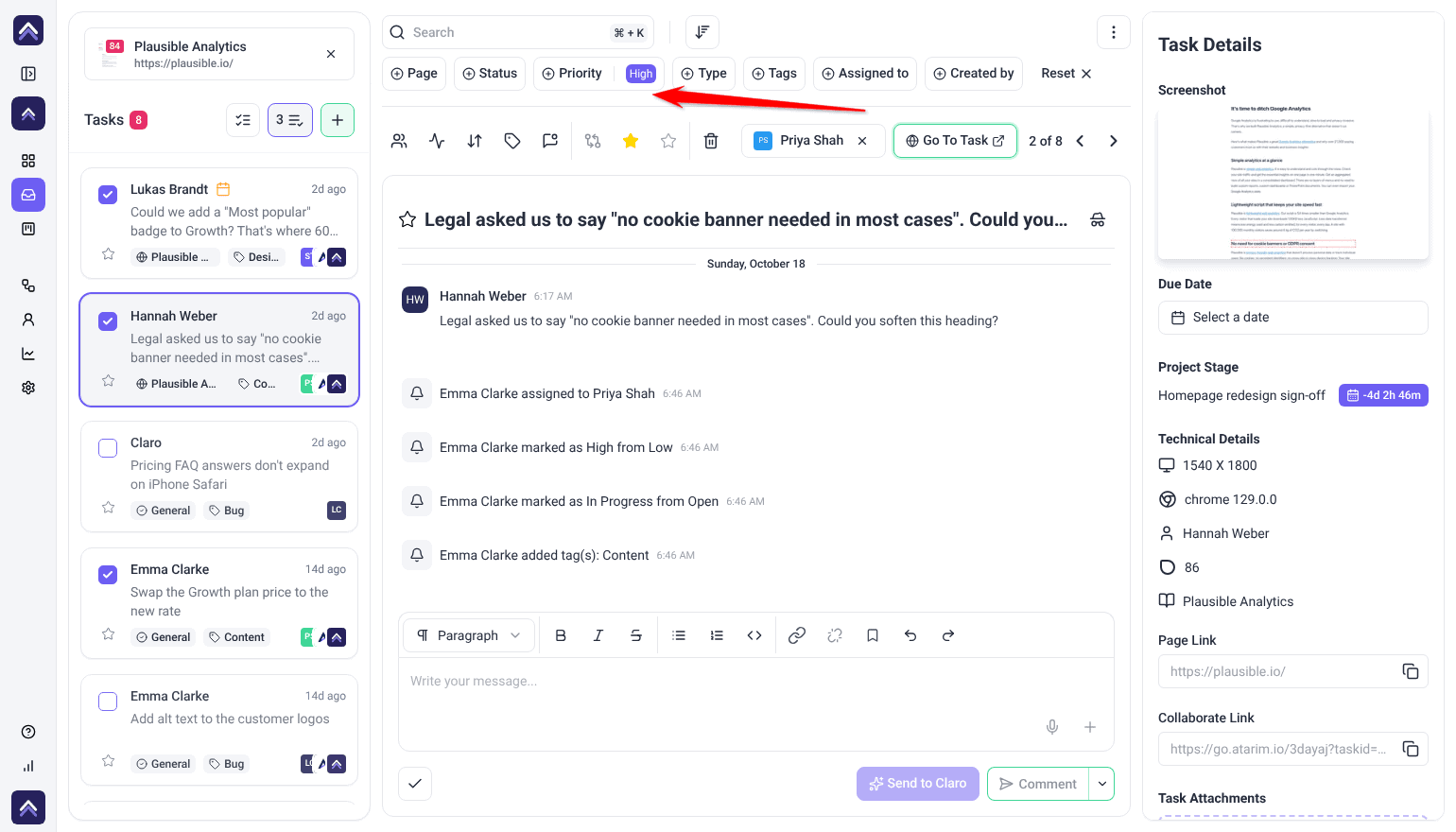
Where a whole batch shares the same urgency, select them and set it once.
Instructions:
- Filter to the tasks you mean — one client, one tag, one status.
- On Boards, hover a card to reveal its checkbox and tick each task you want. In the Inbox, select Select multiple tasks first, then tick the tasks or use Select all.
- Use the priority control on the bulk toolbar. Every selected task is set to that level at once.
Setting a Due Date
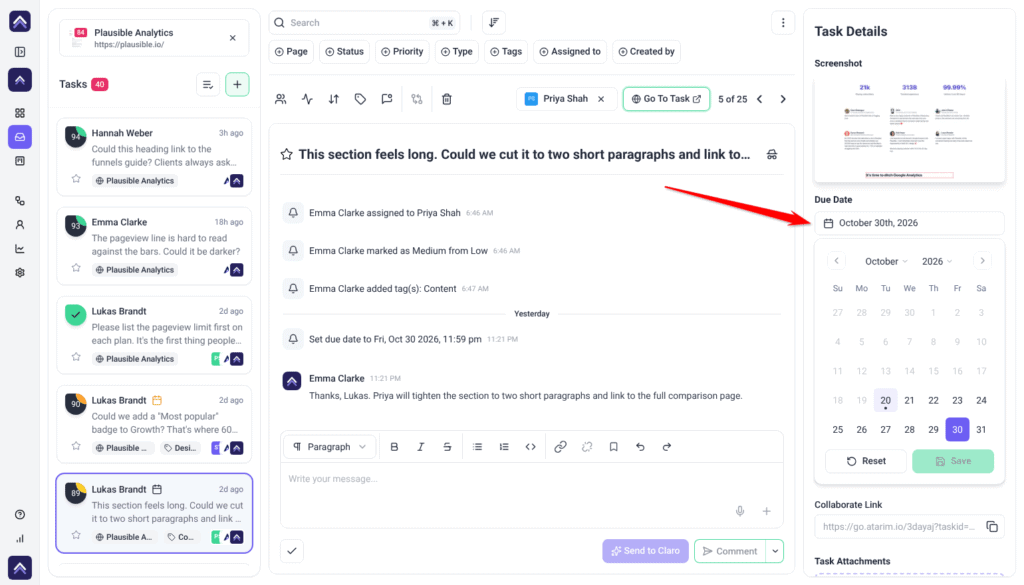
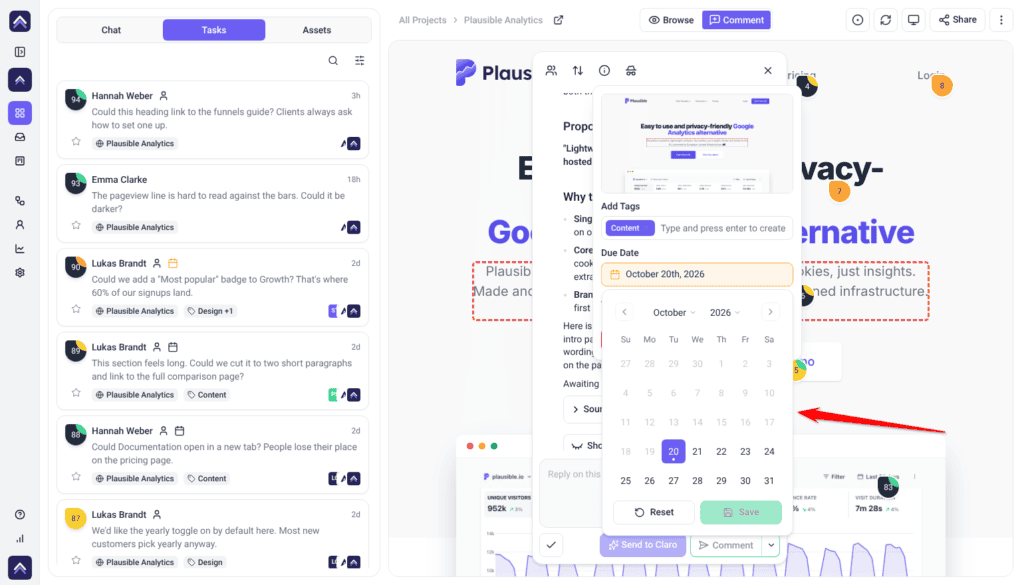
A due date can be set from any view. Pick the date, then save it.
Instructions:
- Open the task from the Inbox, Boards, or Collaborate.
- Select the Due Date field to open the date picker.
- Choose the date, then select Save. The date is visible to everyone on the project. To remove it, open the picker again and select Reset.
What the Due Date Colours Mean
This is the part that makes due dates useful rather than decorative. The date indicator changes colour as the deadline approaches, so an overdue task is visible without opening anything.
| Colour | Means | The tooltip shows |
|---|---|---|
| No colour | More than 72 hours away. A task with no due date shows no indicator. | How many days are left, such as Due in 13 days. |
| Orange | Due within 72 hours. | How long is left. |
| Red | Overdue. | Exactly how late — Overdue by 3 days 4h, or Overdue by 6 hours for anything under a day. |
The same colours appear wherever task cards do, so a board and the Inbox both surface an approaching deadline at a glance. Learn More About Reading Task Cards On Boards
Sorting by Priority
Once priorities are set, sorting turns them into a working order.
| Sort option | Use it to |
|---|---|
| Latest Activity First | See which tasks have moved most recently. |
| Priority: High To Low | Start the day with the most urgent work at the top. |
| Priority: Low To High | Clear quick, low-stakes items when you have a short window. |
| Newest Task First | See what has just come in. |
| Oldest Task First | Find what has been waiting longest. |
| Status: Open to Done | Put work that has not started at the top. |
| Status: Done to Open | See finished work first. |
Sorting changes your own view of the list only, not anyone else's.
Instructions:
- Open the Inbox and find Sort Tasks.
- Choose an order. The list reorders immediately.
Automating Priority and Chasing Deadlines
Priority is the one field workflows handle well, because urgency often follows a rule. Atarim already emails the task’s assignee automatic due-date reminders — two days before, the day before, on the due date, one day overdue, and seven days overdue — and these are built in and cannot be turned off. Workflows are how you add custom or team-wide reminders on top of those.
| What you want | How to build it |
|---|---|
| Alert the team when something becomes Critical | Task priority changes trigger, then an If/Else step checking Task priority is set to Critical, with a notification in its If branch and at least one step in its Else branch. |
| Set priority automatically on arrival | Task added trigger with a Change task priority step. |
| Chase work that has gone quiet | A status change, a Delay of a few days, then a comment or notification. |
| Escalate ageing work | A Delay followed by Change task priority to raise it. |
Project Deadlines Are Different
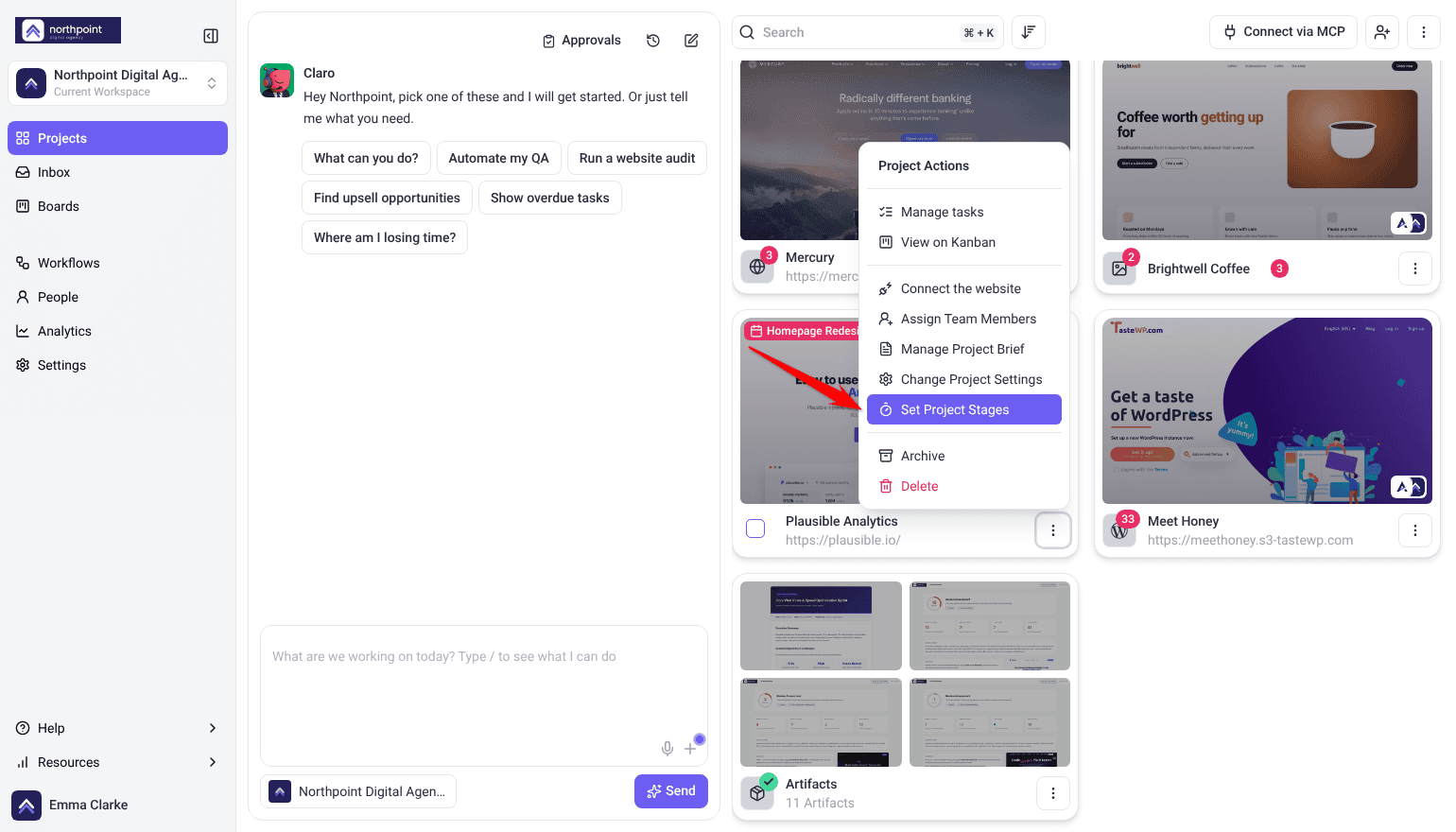
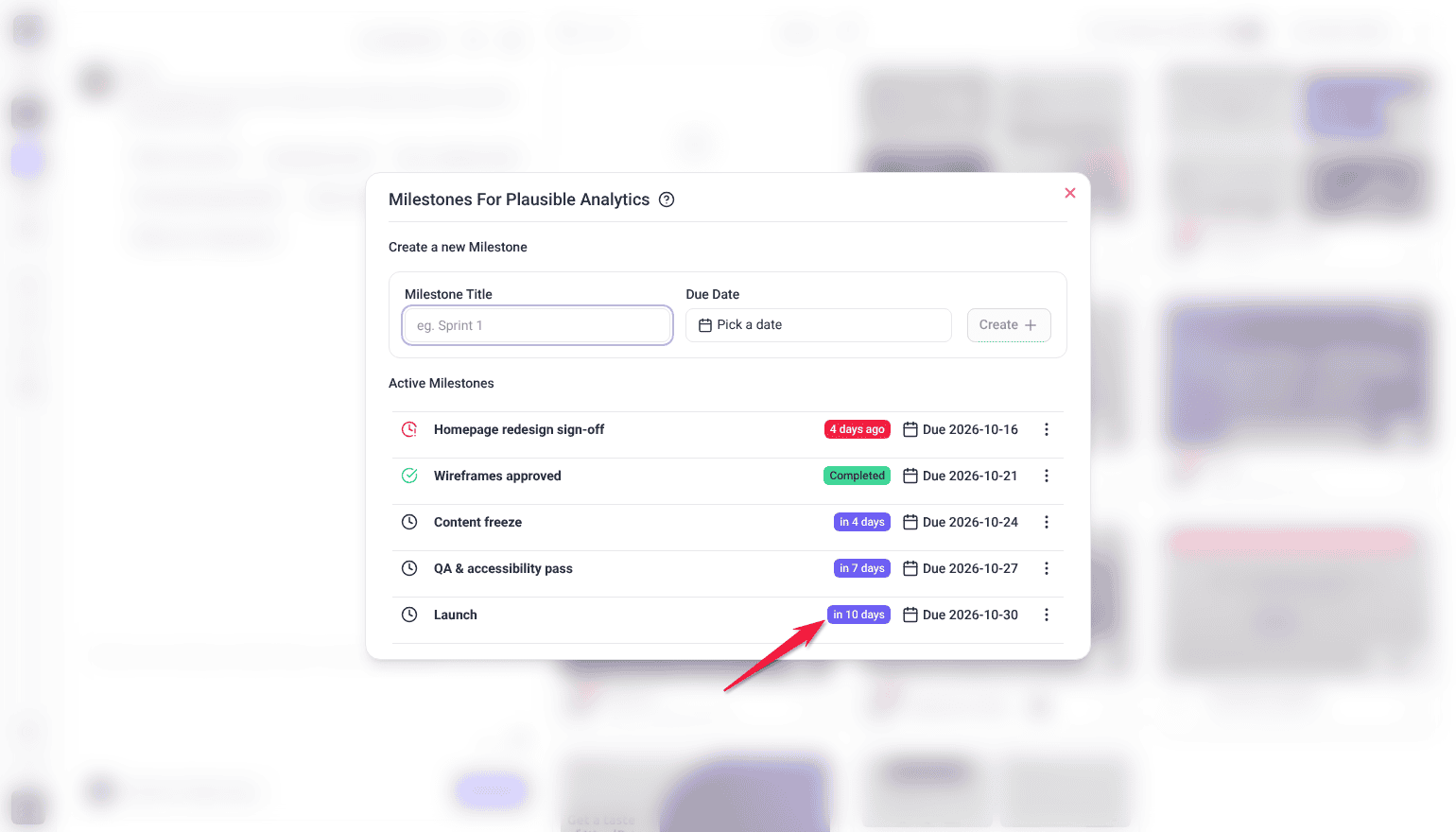
Task due dates are for individual pieces of work. Deadlines for a whole project are handled by project stages instead, which show clients where a project has reached. Explore Project Stages

Seeing Whether It Is Working
Priorities and dates are only useful if the pattern they create is a healthy one, and reporting is where that shows.
Instructions:
- Open Analytics and look at the Overview. High Priority Percentage shows what share of recent tasks are set to High, and the Urgent Tasks Volume chart splits open tasks by priority, including Critical. Together they show whether the top levels are used sparingly or as a default.
- Check turnaround and completed-on-time figures. If dates are consistently missed, they are being set optimistically rather than realistically.
Benefits of Using Both Properly
| Benefit | In practice |
|---|---|
| The next task is obvious | Sorting by priority answers “what now” without a conversation. |
| Slipping work announces itself | Orange at 72 hours means you find out before the client does. |
| Triage takes minutes | The Task priority board turns a review round into a sorted board by dragging. |
| Urgency can trigger action | A workflow on priority change turns Critical into a notification. |
| Overcommitment becomes visible | Reporting shows whether dates are being met or quietly missed. |
Example Use Cases
| Situation | What to do |
|---|---|
| Forty tasks after a client review | Open the Task priority board and drag them into columns. Triage and priority in one pass. |
| A launch next Friday | Put the date on the handful of tasks that must land, and leave the rest undated so the pressure is visible. |
| A whole client batch is urgent | Filter to their tag, select all visible, and set the priority in bulk. |
| Starting your own day | In Collaborate, filter to Assigned To Me and sort by Priority. |
| A short window between meetings | Sort Priority: Low To High and clear a few quick items. |
| Nobody notices when something turns Critical | Build a workflow on the priority change trigger to notify the team. |
Known Limitations
- Status and priority are a paid feature.
- There is no sort by due date. The Inbox sorts by activity, date created, priority and status.
- Due dates cannot be set in bulk. Priority can; dates are one at a time.
- Four priority levels, fixed. They cannot be renamed or added to.
FAQs
What is the difference between priority and status?
Priority is how much something matters; status is how far along it is. They are independent, so a task can be Open and Critical.
Why has a task’s date turned orange?
It is due within 72 hours. Red means the date has passed.
Can I set due dates for several tasks at once?
No. Priority can be set in bulk, but dates are one task at a time.
Does Atarim remind me when a task is due?
Yes. Atarim automatically emails the task’s assignee due-date reminders — two days before, the day before, on the due date, one day overdue, and seven days overdue — and these are built in and cannot be turned off. Build a workflow with a Delay and a notification only if you want custom or team-wide reminders on top of those.
Can I sort my tasks by deadline?
No. The Inbox sorts by activity, date created, priority and status. Use the date colours to spot what is close.
What is the fastest way to prioritise a lot of tasks?
Open the Task priority board on Boards and drag the cards into columns. That sets the priority as you sort.
Can I add my own priority levels?
No. The four levels are fixed. Use tags for any further categorisation you need.
Common issues
- The priority control shows a lock — status and priority are not on your plan. The panel names the minimum plan required.
- A task’s date is orange or red — orange is due within 72 hours, red is overdue. Hover for the exact figure.
- You cannot sort by due date — not available. Sort by priority and use the colours to spot approaching deadlines.
- You cannot set dates in bulk — due dates are per task. Status, priority, tags, notified people and pins can be set in bulk, and tasks can be deleted in bulk. Assignees and the internal flag are set one task at a time.
- Dragging changed priority instead of status — you are on the Task priority board. Switch to the Task status board.
- Everything on the board is Critical — a triage habit rather than a real emergency. Agree what Critical means and re-triage on the Task priority board.
- Only the assignee is told when a deadline nears — the built-in reminder email goes to whoever the task is assigned to. Build a workflow if anyone else needs telling.
Conclusion
Keep priority meaningful by keeping Critical rare, and keep due dates meaningful by putting them only on work that genuinely has one. Then the Task priority board handles triage, the colours handle warning you, and a workflow handles telling everyone — which leaves the actual judgement as the only part you have to do yourself.
How tasks move through to completion once prioritised is covered separately. Discover Tracking Task Progress and Completion.
Tips & best practices
- Agree what Critical means and keep it rare. A board that is a third Critical carries no information.
- Date only the work that genuinely has a deadline, so the dates that exist mean something.
- Act on orange, not red. Seventy-two hours is enough warning to fix it honestly.
- Triage on the Task priority board after every review round — dragging sets the priority as you sort.
- Start your day in Collaborate with the Assigned To Me filter, sorted by Priority.
- Assign every dated task, since the built-in deadline reminder goes to the assignee. Build a workflow for Critical alerts and for chasing anyone else.