How to Set Up and Customize Projects in Atarim
Name it, brand it, file it, and decide who can leave feedback — everything a project carries beyond its URL.
A project starts as a URL and a screenshot. Everything else — what it is called, which folder it sits in, whose branding a client sees, whether feedback is even switched on — is set afterwards, in one panel.
Spending two minutes there when you create a project saves considerably more later.
Opening a Project’s Settings
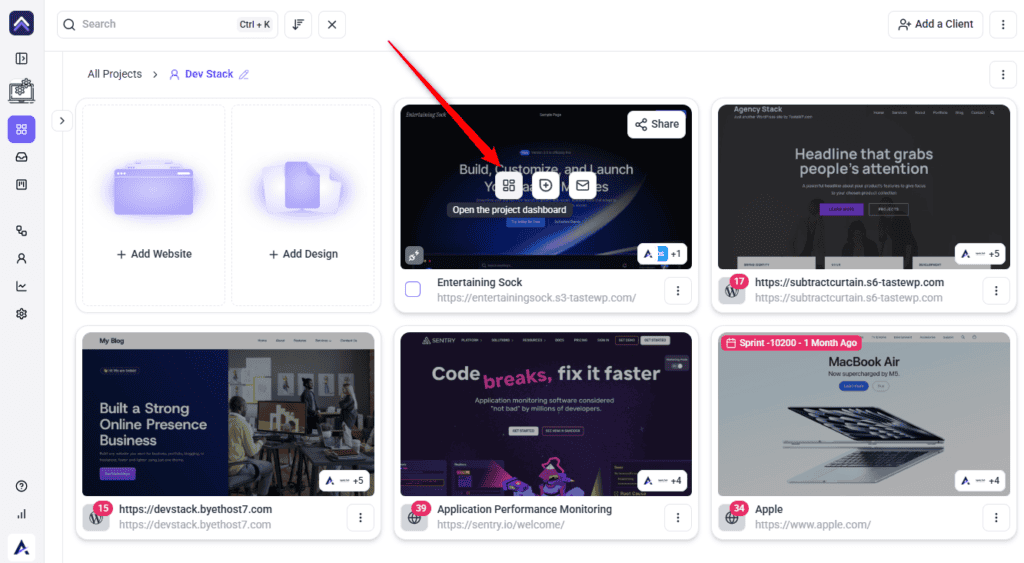
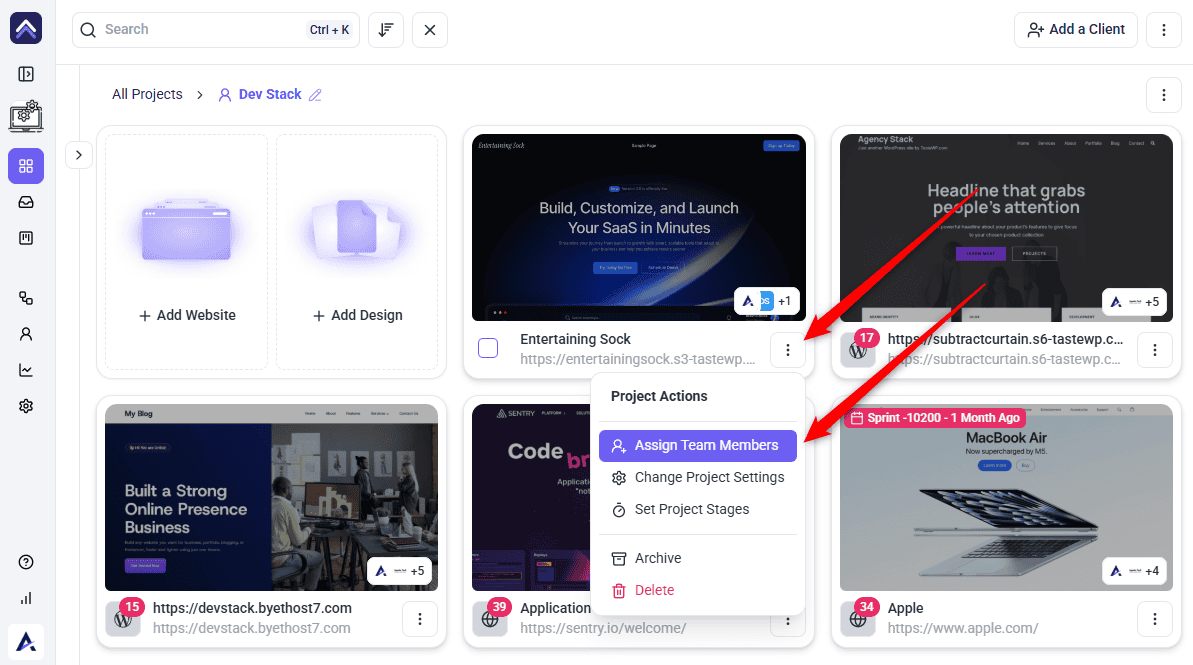
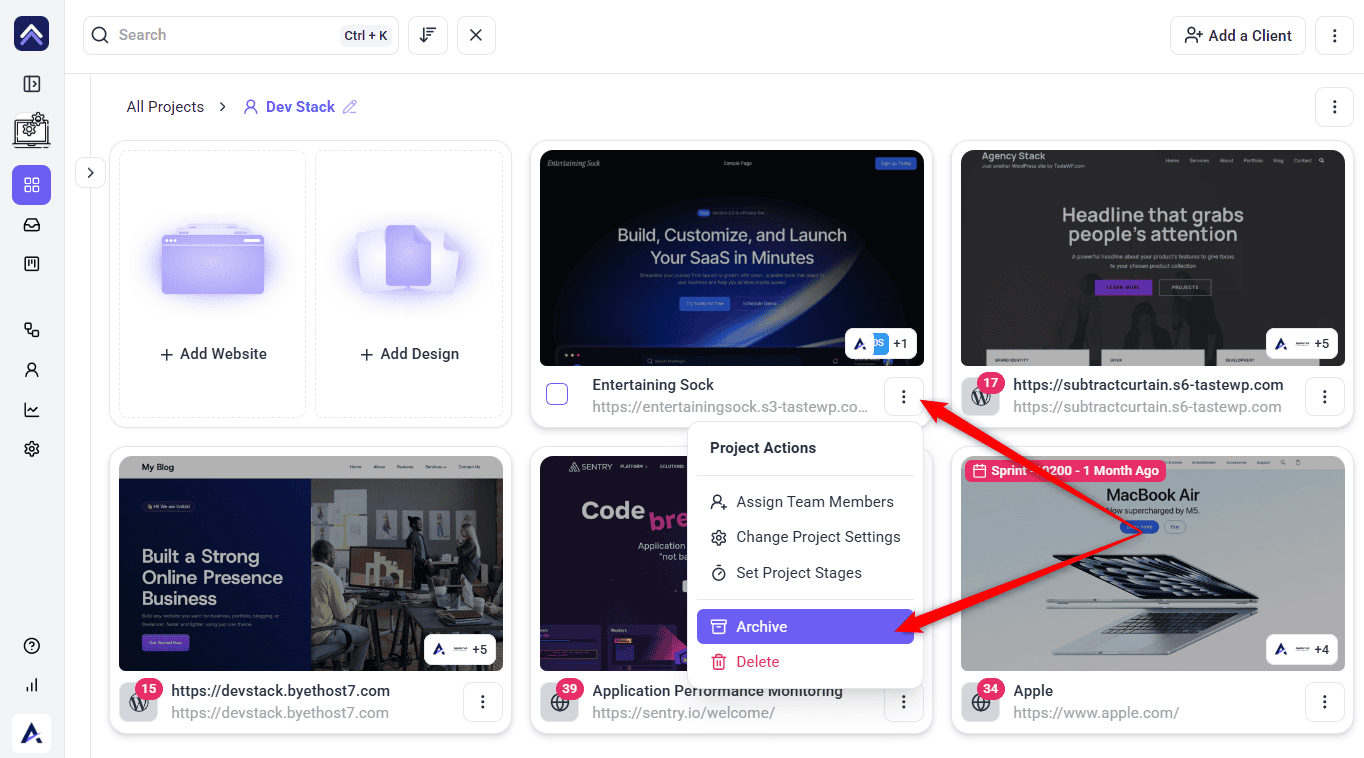
Settings are per project and reached from the project’s own actions menu.
Instructions:
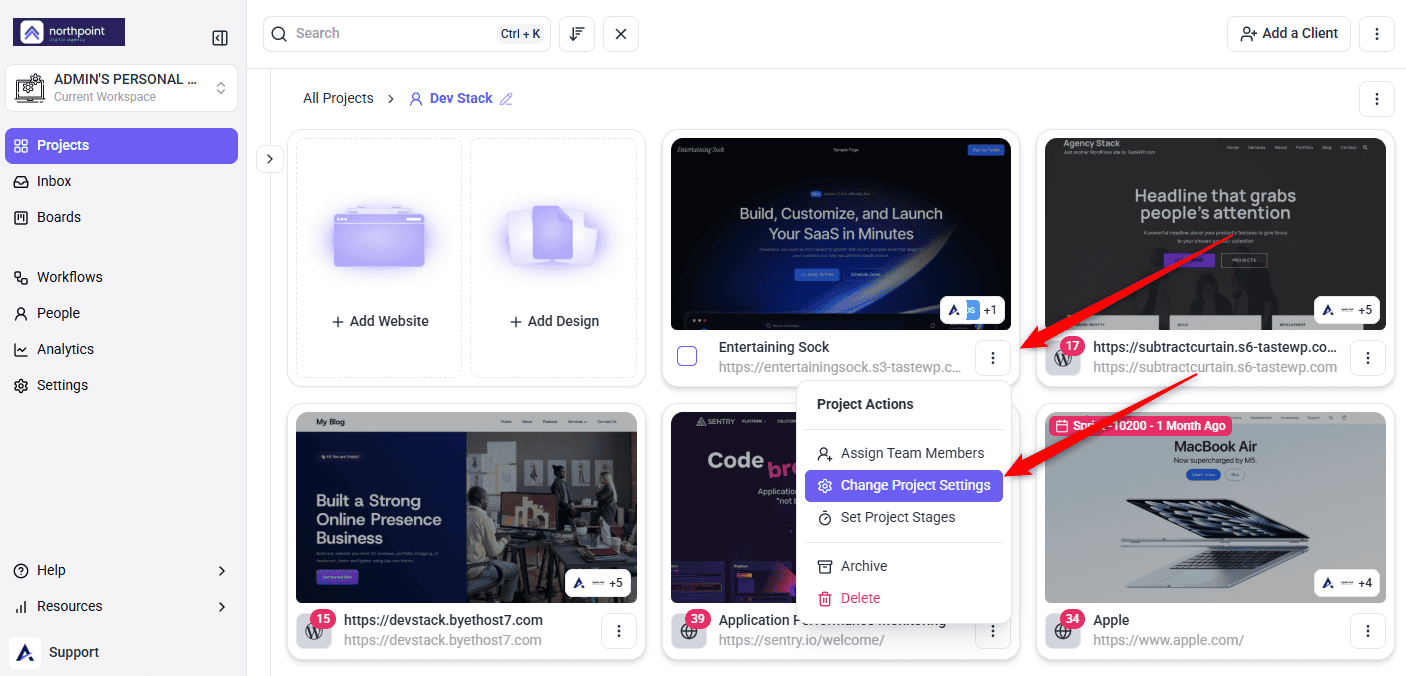
The rest of the Project Actions menu — assigning people, stages, archiving, and deleting — is covered on the Projects screen guide. Explore the Websites Screen Overview.
The Core Settings
These are the fields every project has, whatever type it is.
| Setting | What it does |
|---|---|
| Project Name | What the project is called throughout Atarim. Defaults to something taken from the site, which is rarely what you want. |
| Project URL | The address the project points at. |
| Folder | Which folder the project belongs to, chosen from your existing folders. |
| Language | The language of the collaboration interface for this project. |
| Project image | The thumbnail on the project card, with a control to regenerate it. |
| Enable Collaboration on This Project | Whether feedback can be left at all. |
Choosing a folder here does the same thing as filing the project from its card, and folders carry their own team access. Learn More About Adding And Managing Folders
Refreshing the Project Thumbnail
The card image is captured when the project is created, so a redesigned site keeps showing its old appearance until you refresh it.
Instructions:
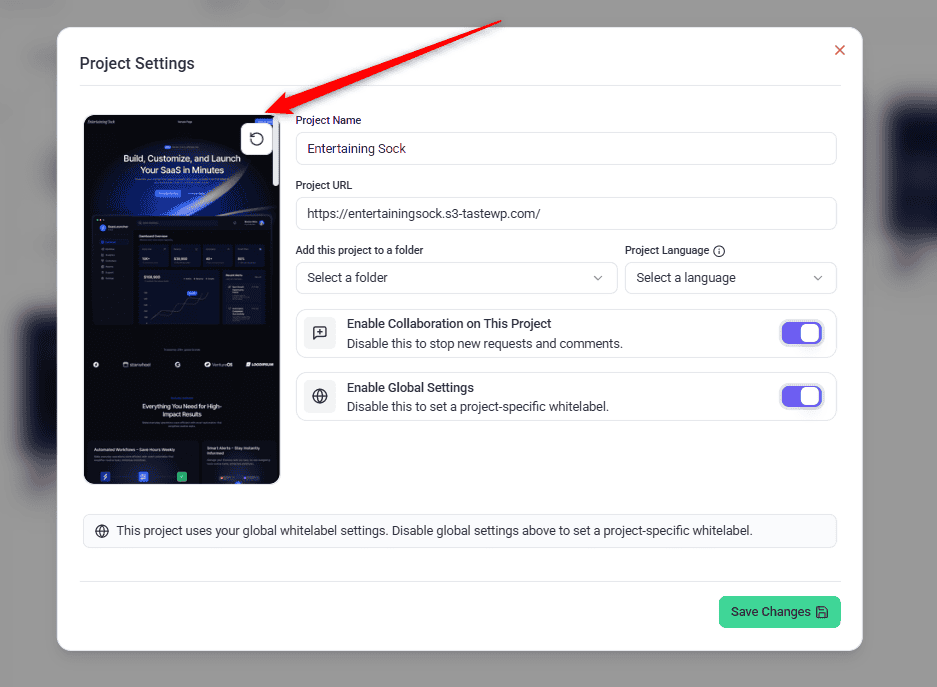
The thumbnail is what you scan the Projects screen by, alongside the project name and its badges. Explore What a Project Card Shows.
Setting the Language
Language is set per project rather than per person, so it follows the audience reviewing the work rather than whoever set it up.
Instructions:
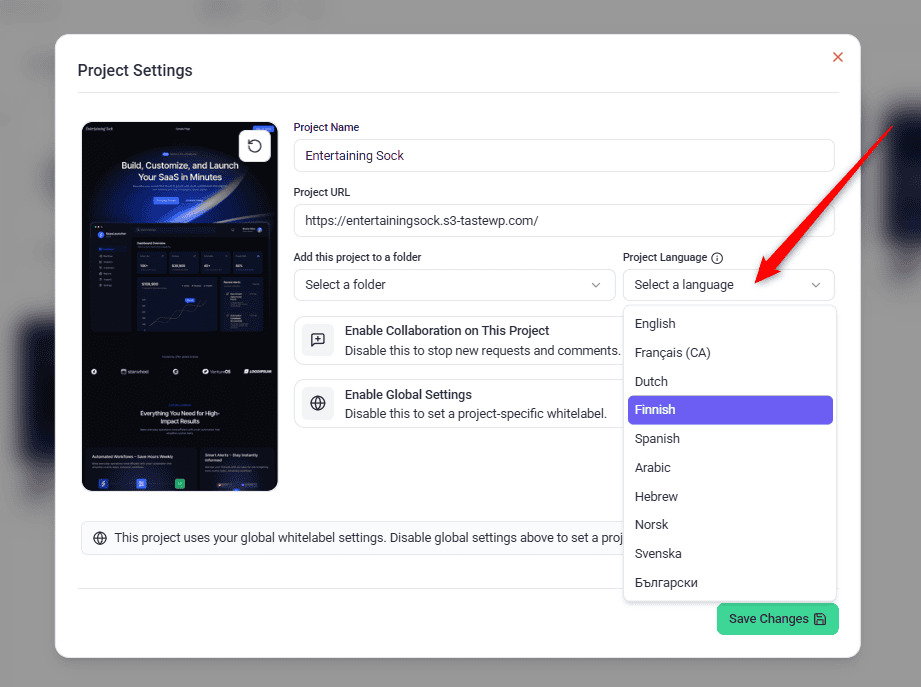
The setting localises the project experience and the AI-generated content produced for it. Explore Atarim AI.
Turning Collaboration On and Off
Collaboration can be disabled per project. It is the switch that decides whether anyone can leave feedback at all.
Instructions:
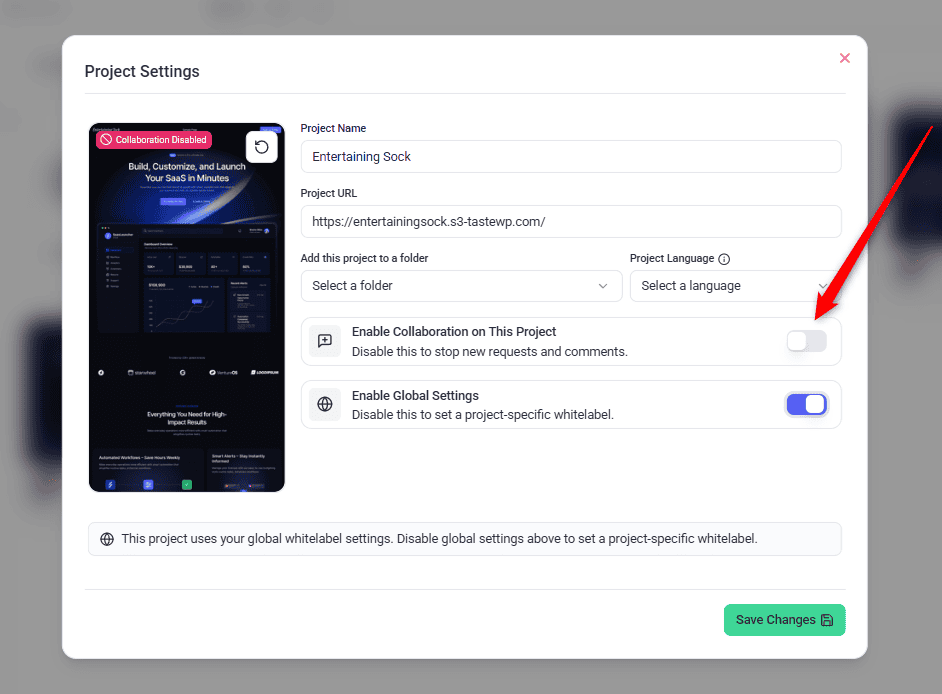
This is different from controlling who can reach a project, which is set with access levels and invitations. Learn More About Controlling Who Can View A Project
White Labelling a Project
This is the part agencies care about most. A project can carry your branding rather than Atarim’s, so a client reviewing their site sees your agency instead of a tool they have never heard of.
| Setting | What it changes |
|---|---|
| Logo (Upload Image) | The logo shown in the collaboration interface. Uploaded as a file — 180 x 45 px. |
| Custom Logo URL | Where clicking your logo takes the viewer. Not the image itself. |
| Favicon (Upload Image) | Replaces the Atarim icon in the admin side menu. Uploaded as a file — 50 x 50 px. |
| Colour | The accent colour of the interface, chosen with a colour picker. |
Per-project white labelling overrides the workspace default for this one client, which is the whole point of setting it here.
Instructions:
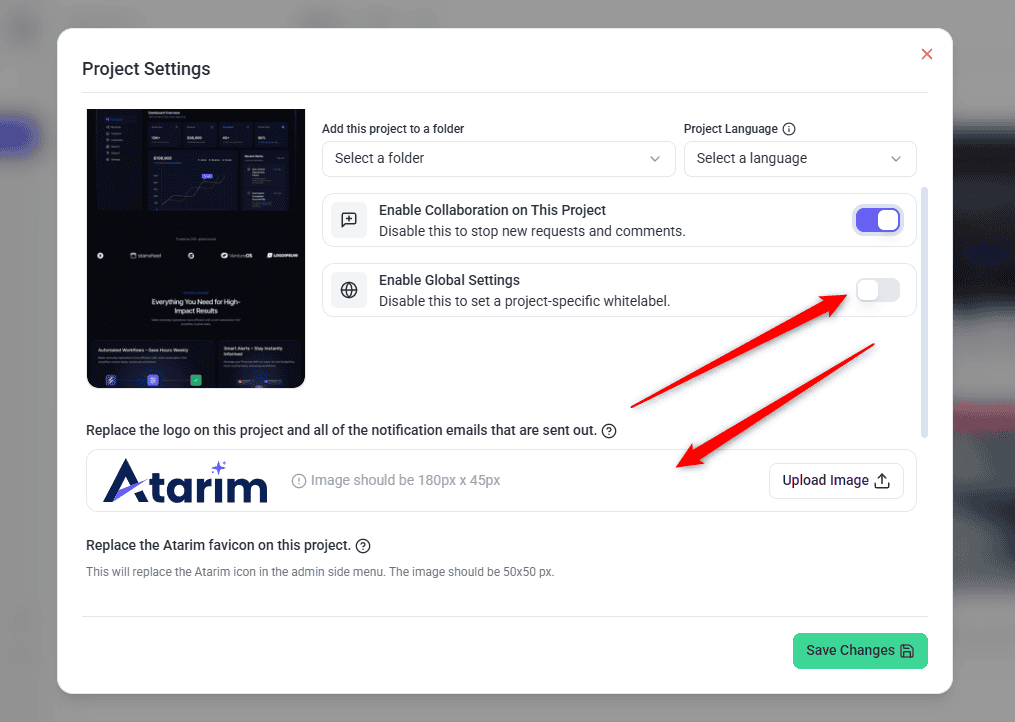
Branding can also be set once for a whole workspace rather than project by project, along with removing mentions of Atarim entirely. Discover White Labeling: Customizing Atarim to Reflect Your Brand.
Global Settings and Per-Project Overrides
Setting the same branding on every project would be tedious, so settings can be inherited from your workspace instead.
| Enable Global Settings | What happens |
|---|---|
| On | The project uses your workspace-wide settings. Change them centrally and every project following them updates. |
| Off | The project keeps its own settings, independent of the workspace. |
Leave global settings on for most projects and switch them off only where a client needs different treatment.
Instructions:
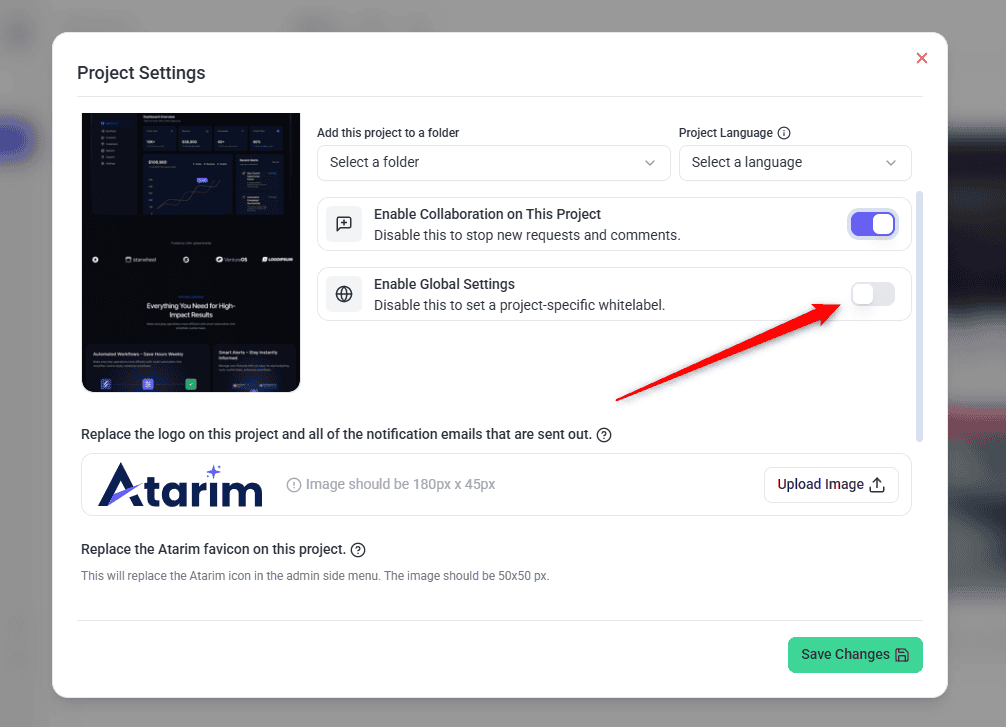
The global settings this inherits from — general options, branding, and notifications — are set on your dashboard rather than on any single project. Learn More About Managing Your Account Settings.
The project brief is separate
Worth knowing, because it is easy to look for in the wrong place. The Project Brief is not part of Project Settings — it has its own panel, opened from its own control.
A brief describes what the project is and who it is for, which is what gives Atarim’s AI context when it reviews the site or generates content for it.
Instructions:
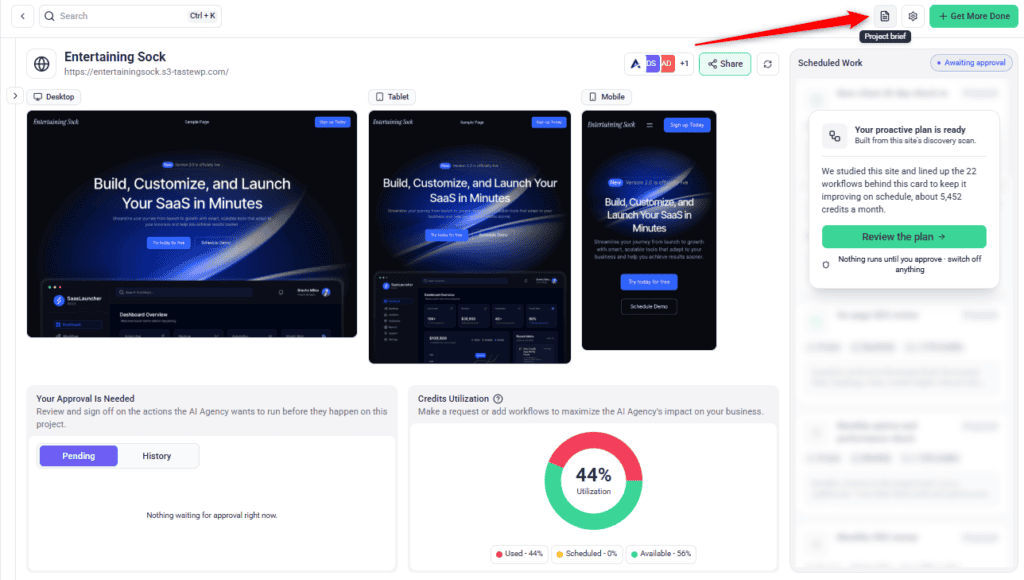
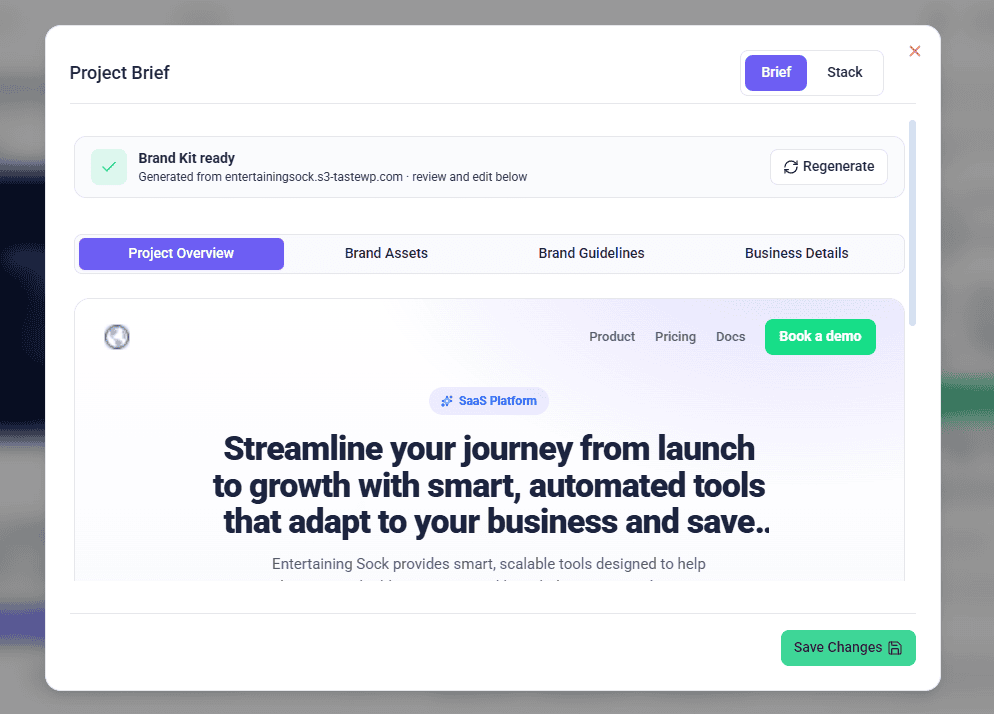
The brief is what gives Atarim’s AI context about a project, so it shapes everything the AI produces for it. Discover How Atarim AI Learns Context.
Linking a Figma File
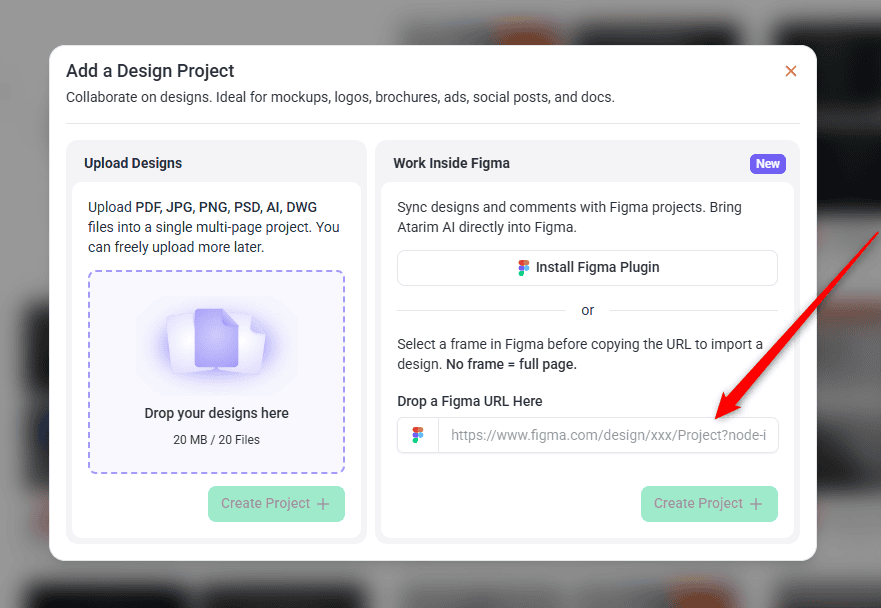
A project can hold a Figma URL, so the design source is one click away from the site it became.
Instructions:
Giving People Access to the Project
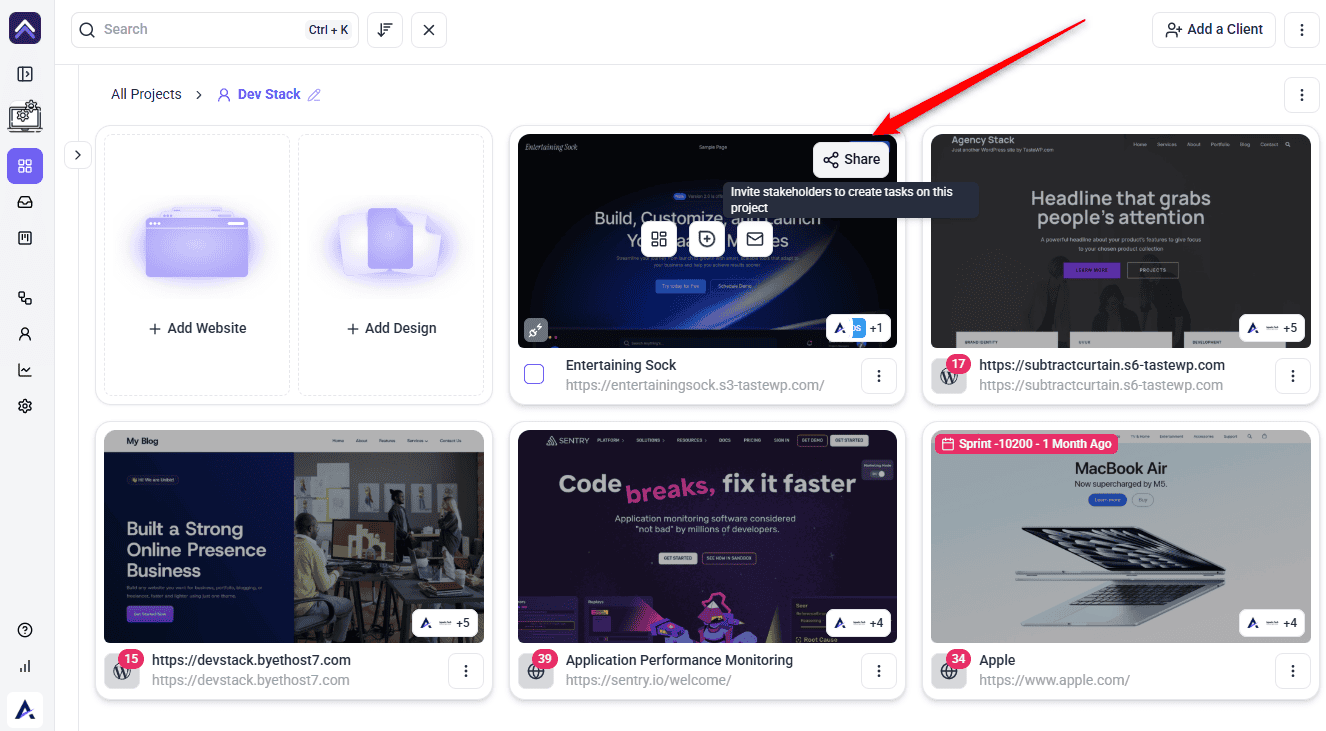
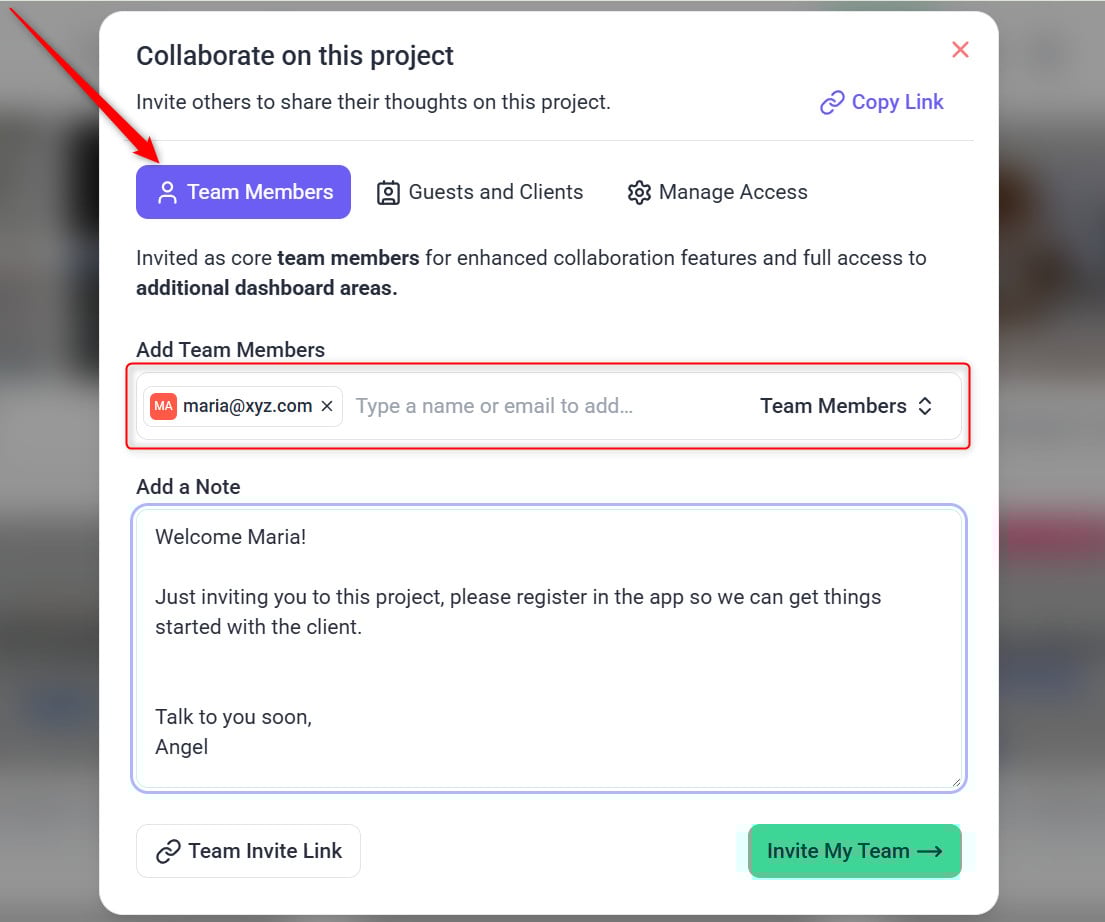
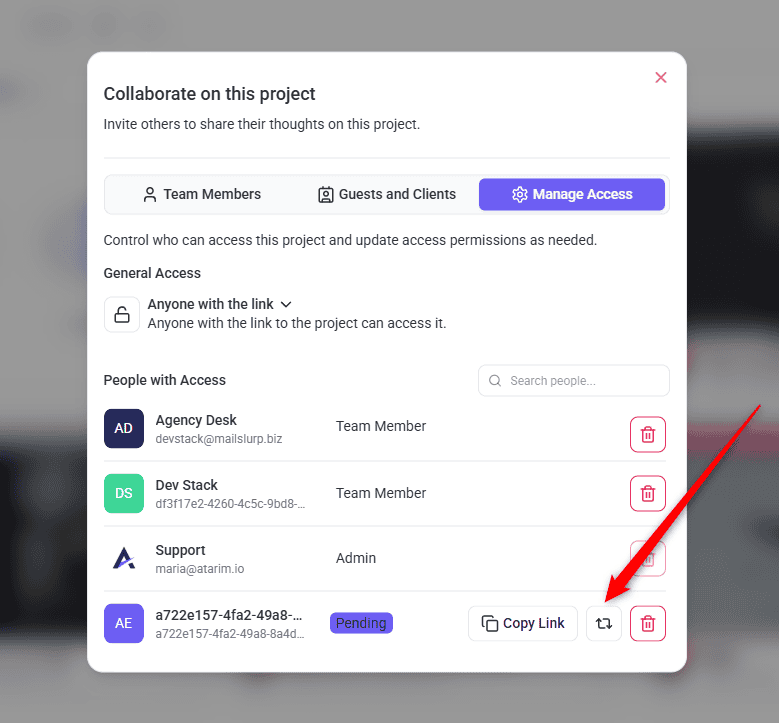
Access is separate from settings. People can be added from the People screen, from the project’s share panel, or by assigning them to the project directly. Assignment is covered in full separately. Discover Assigning Projects And Tasks
Filing the Project in a Folder
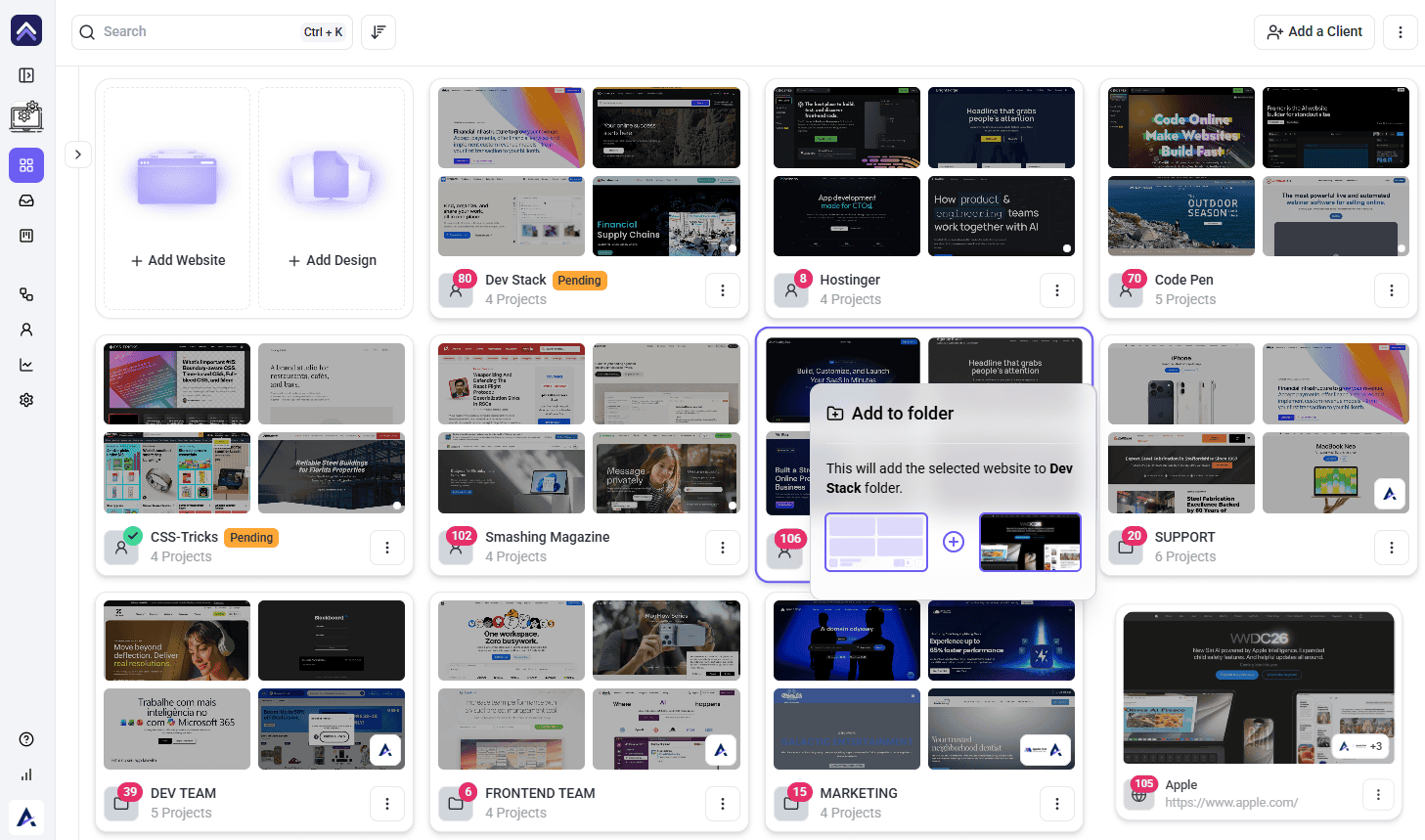
You can also create a folder by dragging one project onto another, then file further projects into it. Learn More About Adding And Managing Folders
Archiving or Deleting the Project
Both sit in the same Project Actions menu as the settings. Archiving keeps everything and can be reversed; deleting is permanent. Read Before You Delete
Benefits of Setting Projects Up Properly
| Benefit | In practice |
|---|---|
| A scannable Projects screen | Named projects with current thumbnails beat a list of default titles and stale screenshots. |
| Clients see your brand | White labelling changes how the whole review feels, for the cost of one setting. |
| Reviewers work in their own language | Set per project, so it matches the audience rather than the person who set it up. |
| Consistency without repetition | Global settings apply your branding everywhere, with overrides where a project needs something different. |
| Better AI output | A project brief gives reviews the context to be specific rather than generic. |
| The design source is findable | A Figma link on the project answers a question that otherwise needs archaeology. |
Example Use Cases
| Situation | What to set |
|---|---|
| A new client project | Rename it, file it in the client’s folder, and confirm the language matches the reviewers. |
| Work delivered under your agency’s name | White label with your logo, favicon, and colour — or leave global settings on if that is already your default. |
| Reselling under a client’s brand | Switch global settings off for that project and apply their branding instead of yours. |
| A site that has just launched | Refresh the thumbnail so the card stops showing the old design. |
| A project going quiet but staying visible | Disable collaboration rather than revoking access — your team keeps the work, nobody can add to it. |
| Before running AI reviews | Generate and edit the project brief, so the AI knows what the site is for. |
Known Limitations
FAQs
Can I rename a project after creating it?
Yes, at any time, in Project Settings. It is worth doing as you create each one.
Can I upload a logo instead of linking to one?
Yes. Both the logo and the favicon are uploaded with Upload Image. The separate Custom Logo URL field is not the image source — it sets where clicking the logo takes the viewer.
What is the difference between global and per-project settings?
Global settings apply your workspace defaults to the project. Switching them off lets that project carry its own branding.
Why is my project thumbnail out of date?
It is captured when the project is created. Use the sync control in Project Settings to regenerate it.
What happens if I disable collaboration?
Nobody can leave feedback on that project, and reviewers see that collaboration is disabled. Existing tasks are unaffected.
What is the project brief for?
It gives Atarim’s AI context about the site, so reviews and generated content are specific rather than generic. It can be generated and then edited.
Can I link the Figma file a site was built from?
Yes. Add the Figma URL in Project Settings and an Open in Figma control appears.
Common issues
- “Collaboration is disabled for this site” — switch Enable Collaboration on This Project back on in Project Settings.
- Your logo does not appear — check the URL loads publicly in a private browser window. The field takes a link, not a file.
- The thumbnail shows an old design — use the sync control on the project image to regenerate it.
- Branding changes did not apply — check whether Enable Global Settings is on. The project may be following workspace settings rather than its own.
- Change Project Settings is missing — your role does not carry the permission. An administrator can grant it.
- The client sees the wrong language — language is set per project. Change it in Project Settings rather than in their account.
- No folder appears in the selector — you have not created any folders yet.
Conclusion
Two minutes per project — a proper name, the right folder, your branding, the reviewer’s language — is the difference between a Projects screen you can work from and one you fight. Set your defaults globally, override only where a client needs their own, and everything after that takes care of itself.
Which folder a project belongs to is worth deciding at the same time. Explore Adding And Managing Folders
Tips & best practices
- Rename every project as you create it. Default titles taken from a site are rarely useful.
- Set branding once globally, then override only the projects that need a client’s brand instead of yours.
- Choose the language from the client’s perspective, not your team’s.
- Refresh the thumbnail after a launch so the card matches reality.
- Generate the project brief and then edit it — that is what makes AI reviews specific.
- Add the Figma link while you still remember where the design lives.