Working with External Collaborators and Clients in Atarim
Bring clients, freelancers, and vendors into a project to give feedback — without handing over your dashboard.
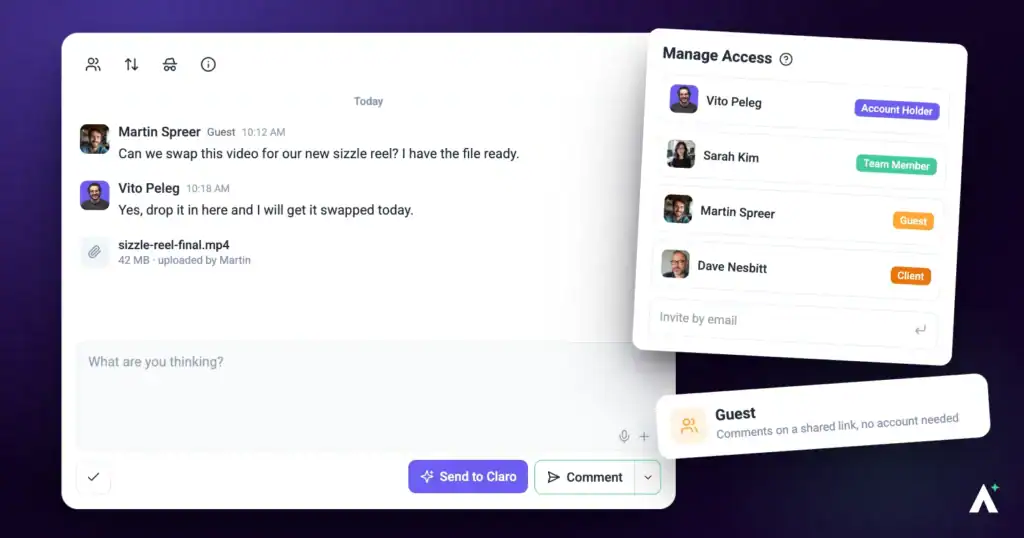
Atarim is built so external people can give feedback without learning a project management tool and without you giving away access to anything else. A client opens a link, selects the thing they want changed, and types a sentence. That becomes a task on your board.
The whole thing is controlled from one place — the Share modal on a project — and this article covers the choices it gives you.
Bringing a client in for the very first time has its own walkthrough. Discover How To Invite Clients To Collaborate
Team Member, Collaborator, or Guest?
Three levels of involvement, and picking the right one is most of the decision. The differences are about how much of Atarim someone needs to see.
| Type | Who they are | What they get |
|---|---|---|
| Team Member | Someone who works for you. | Dashboard access and a seat on your plan. |
| Collaborator | A client or stakeholder you invite by name. | Access to the projects you share with them, to review and comment. |
| Guest | Anyone who opens the link when Guest Mode is on. | The ability to leave feedback on that project without an invitation or an account, after giving their name and email. |
The Share Modal
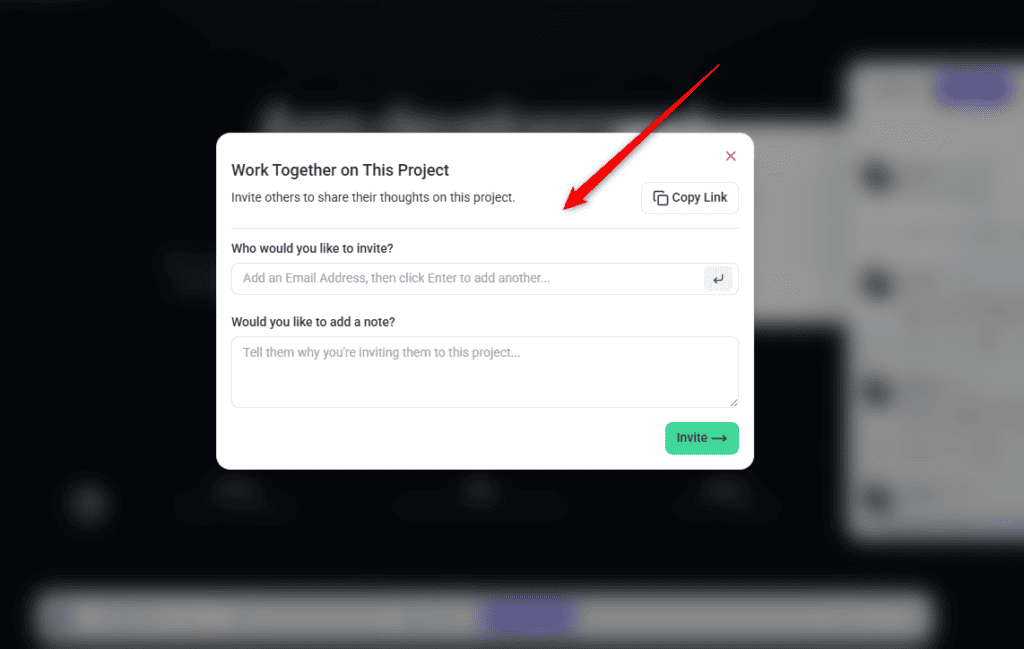
Everything about external access is in one place, headed Collaborate on this project with the line “Invite others to share their thoughts on this project.”
| Tab | What it is for |
|---|---|
| Team Members | Adding your own people to the project. Team seats and roles are managed separately. Learn More About Managing Team Members |
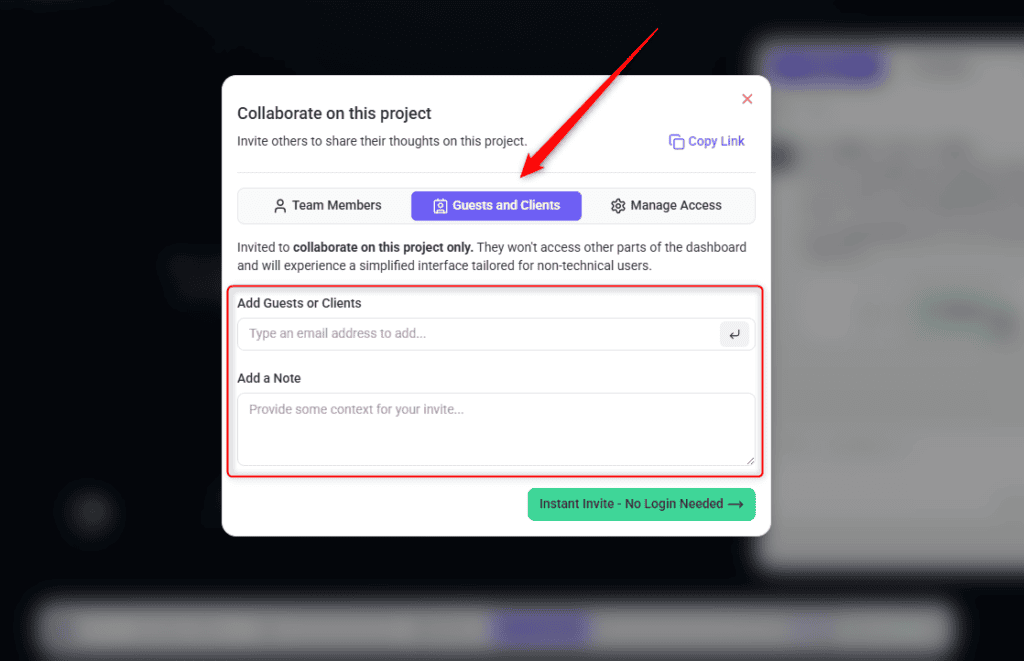
| Guests and Clients | Inviting external people by email. |
| Manage Access | Who can view the project, Guest Mode, and everyone who currently has access. |
Opening it takes two steps, and there are two places to start from depending on where you already are.
Instructions:
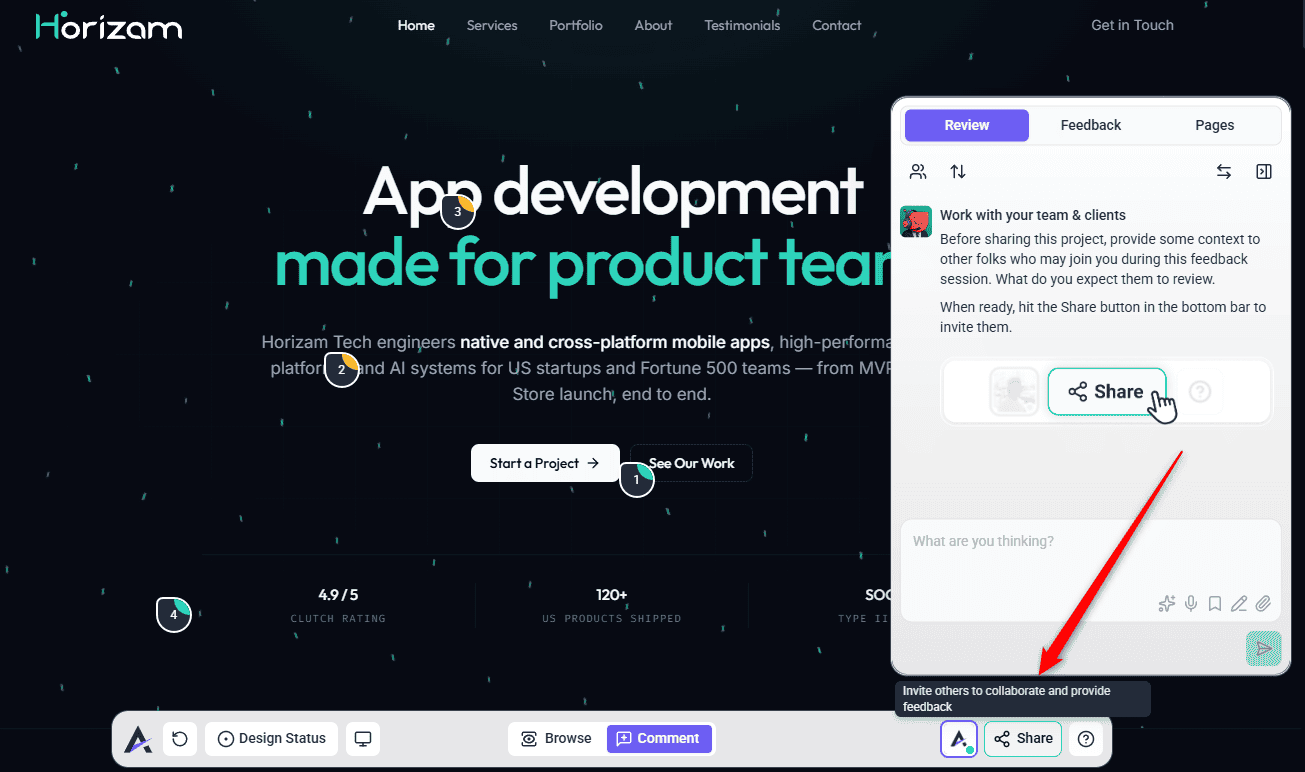
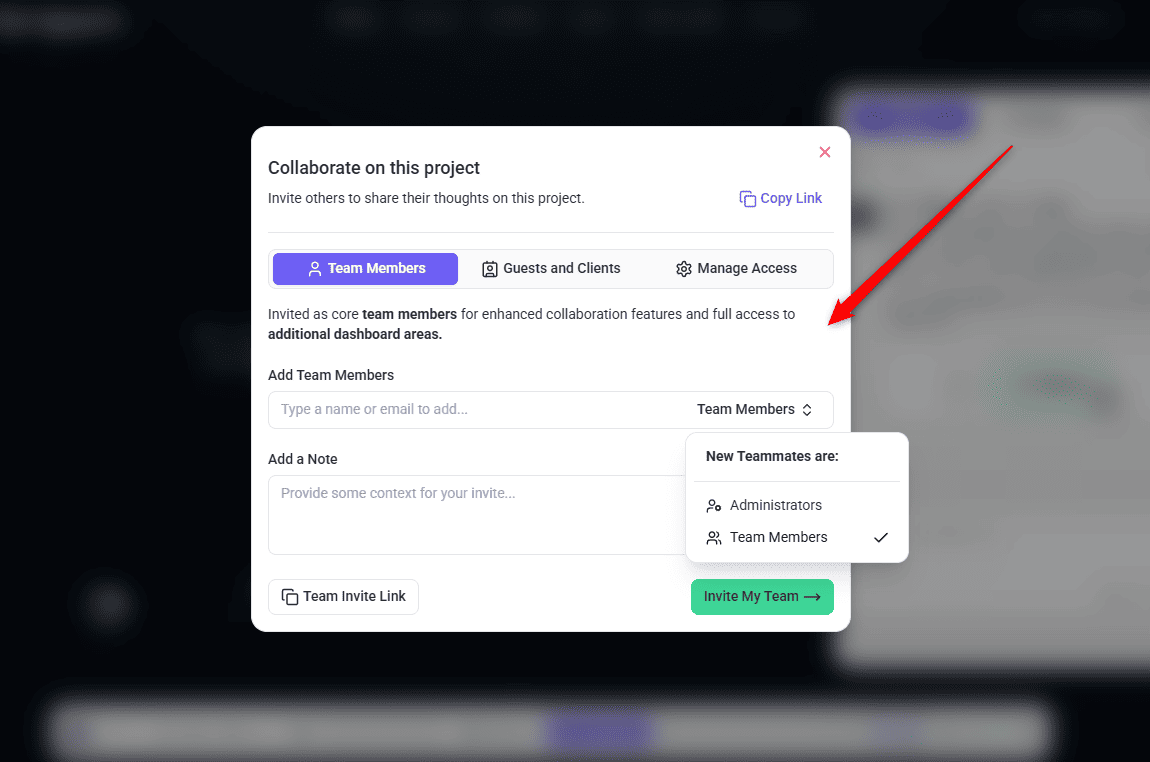
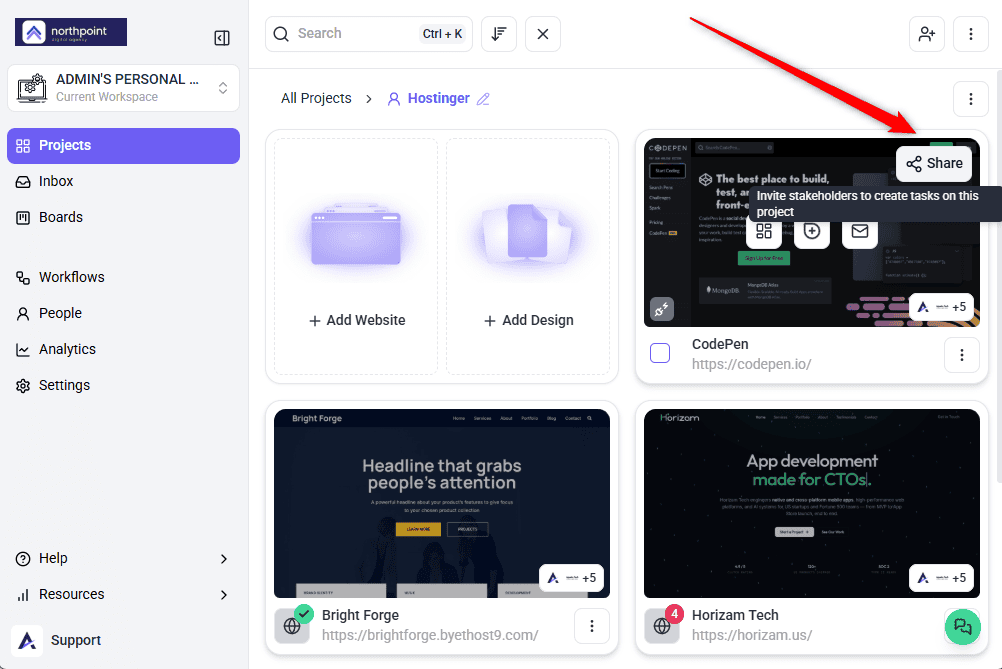
Inviting a Client by Name
This is the route to use when you know who you are inviting. They get their own invitation, and you can see and revoke their access later.
Instructions:
Sharing a Link Instead
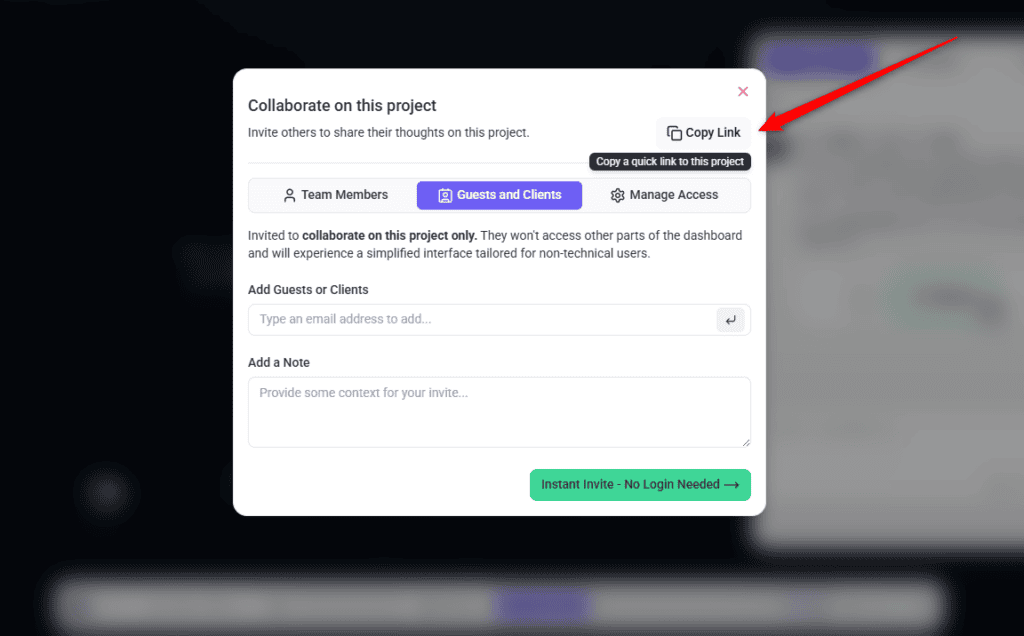
Sometimes an invitation is more ceremony than the situation needs. The share modal also gives you a link you can paste into an email or a chat.
Instructions:
Controlling Who Can View the Project
The Manage Access tab holds the setting that governs everything else. It asks “Who can view this?” and offers two levels.
| Access level | Means | Use when |
|---|---|---|
| Anyone with the link | Anyone holding the URL can view the project. | Wide review rounds where chasing individual invitations is not worth it. |
| Only people with access | Only invited people can open the project. This is the option the sharing panel offers; some older copy calls it restricted access. | Client work, anything under NDA, or a site that is not public yet. |
Access level governs everyone who reaches the project, including people who arrive by link rather than by invitation.
Instructions:
Guest Mode
Guest Mode removes the invitation step entirely. Anyone who opens the project can leave feedback, and Atarim describes what it does plainly: it launches Atarim in Comment Mode for guests by default.
That last part matters more than it sounds. The most common thing that confuses a first-time reviewer is landing in Browse mode and wondering why clicking does nothing. Guest Mode removes that step.
Instructions:
What External People Can and Cannot Do
Clients and collaborators get a deliberately reduced version of Collaborate — enough to give good feedback, not enough to change anything.
| They can | They cannot |
|---|---|
| Select an element and leave a comment, which becomes a task. | See your other projects or clients. |
| Reply in the conversation on a task. | Reach your dashboard settings or billing. |
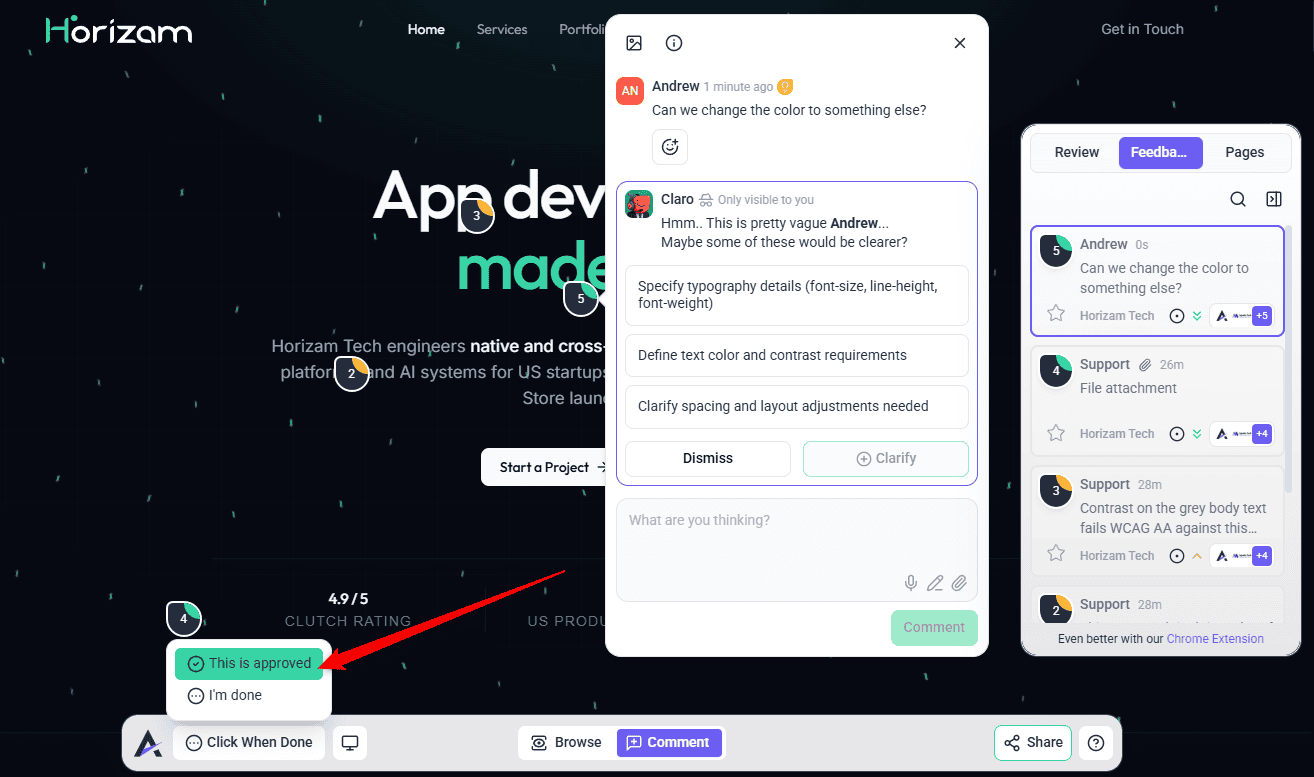
| Set page status — I’m done, or This is approved. | Sign in to your WordPress site through auto-login. |
| Review at desktop, tablet, or mobile widths. | See internal tasks or internal notes. |
How clients leave feedback, and what the tools look like from their side, is covered separately. Explore The Visual Collaboration Tools
Managing Who Has Access
The People with Access list on the Manage Access tab shows everyone who can currently reach the project, with a Search people… box for longer lists.
Instructions:
Running the Feedback Loop
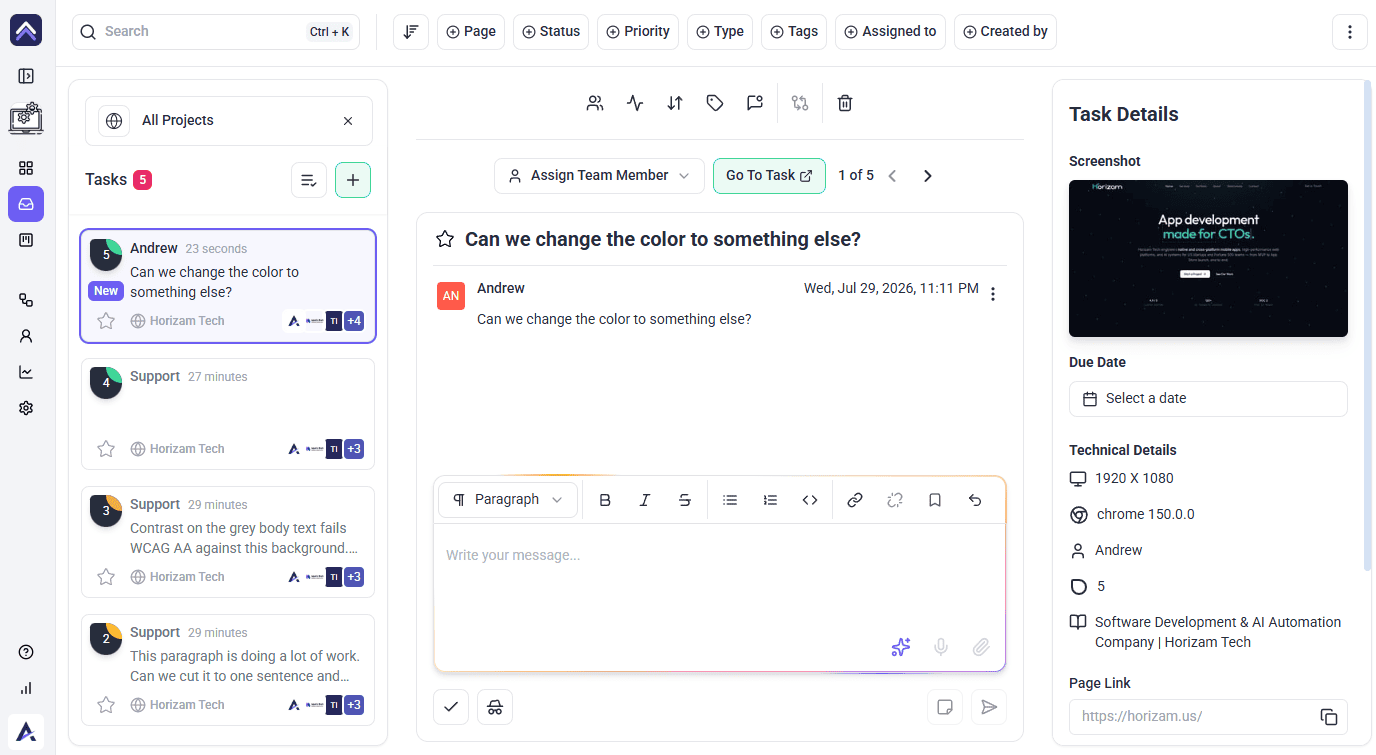
Getting people in is the easy part. Keeping the loop tight is what actually shortens a project.
Instructions:
Benefits of Collaborating This Way
| Benefit | In practice |
|---|---|
| No tool for your client to learn | They open a link and select the thing they want changed. No account to create, no dashboard to navigate, nothing to train them on. |
| Feedback arrives as work | Every comment is already a task with a screenshot, the element, the page, and the screen size attached — so nothing needs transcribing from an email. |
| One conversation per item | Replies stay on the task rather than scattering across email threads, so context survives the project. |
| Access you control | Clients reach only the projects you share, and access can be revoked in seconds without touching their feedback. |
| Faster sign-off | Clients approve pages themselves rather than sending an email saying “looks good to me” about an unspecified page. |
Example Use Cases
| Situation | How to set it up |
|---|---|
| A client reviewing a new build | Invite them by name as a collaborator, set the pages to Needs Review, and send a note explaining what you want looked at. Their feedback lands as tasks and they can approve pages as they go. |
| A launch review with a whole stakeholder group | Switch on Guest Mode, share the link once, and let everyone comment without invitations. Switch it off when the window closes. |
| A freelancer joining for one project | Invite them to that project only. When the work ends, revoke access from People with Access — their contributions stay on record. |
| Work under NDA | Set access to Restricted so only invited people can open it, and leave Guest Mode off. |
| A client who ignores emailed invitations | Use Instant Invite — No Login Needed and paste the link into whatever channel they actually read. |
Known Limitations
FAQs
Do clients need an Atarim account?
Not with Guest Mode on. They open the link, give their name and email so their feedback is attributed, and comment. Invited collaborators get their own persistent access instead.
Can a client see my other projects?
No. External access is scoped to the projects you share with them.
What is the difference between a collaborator and a team member?
A team member works for you, gets dashboard access, and uses a seat on your plan. A collaborator is external and only reaches the projects you share.
Can I stop someone accessing a project?
Yes. Use Remove access from this project on their row under People with Access. It removes them from every task and activity in that project and cannot be undone, though their existing feedback remains on record.
Why did Guest Mode turn off by itself?
Because you restricted the project’s access level. Restricted access and Guest Mode cannot both be on.
Can clients approve pages?
Yes. They see the page status control worded as an instruction — Click When Done, opening to I’m done and This is approved.
Can clients see our internal discussion?
No. Internal tasks and internal notes are visible to your team only.
How do I give a client access to several projects?
Share each one. Access is granted per project rather than across your workspace.
Common issues
- Your client cannot open the link — check General Access. If the project is restricted, they need an invitation, or switch on Guest Mode.
- Guest Mode switched itself off — you restricted the project’s access level. The two cannot both be on.
- The access selector opens an upgrade panel — restricting projects is not included on your plan. The panel names the minimum plan required.
- Your client says clicking does nothing — they are in Browse mode. Ask them to switch to Comment, or enable Guest Mode, which starts them in Comment mode.
- An invitation never arrived — resend it from the Guests and Clients tab and check the address. Ask them to look in spam.
- Someone still shows as Pending — they have not accepted yet. Use Resend the invitation via email on their row, or copy the invitation link and send it another way.
- You need to remove someone quickly — revoke their access from People with Access. Their feedback stays.
- A client can see more than you expected — check whether they were added as a team member rather than a collaborator.
Conclusion
The point of external collaboration in Atarim is that your client does not have to learn anything. Pick the right level of access, send a link, and their feedback arrives as work with the context already attached — no email threads, no screenshots pasted into documents, no guessing which button they meant.
Bringing a client in for the first time has its own guide. Learn More About Inviting Clients To Collaborate
Tips & best practices
- Invite named clients as collaborators; save Guest Mode for wider rounds where chasing invitations is not worth it.
- Turn Guest Mode on for the review window and off afterwards. Otherwise the link stays open indefinitely.
- Set the page to Needs Review before you share, so it is obvious whose turn it is.
- Send one sentence with the link explaining what you want reviewed and by when.
- Review People with Access at the end of every project. Old access accumulates quietly.
- Keep working discussion in internal notes so clients see conclusions rather than deliberation.